Villages and castles of the Parma and Piacenza hills
A land of villages and fortresses
One of the things I love most about living at Podere Montevalle is having some of Italy's most beautiful and best-preserved medieval villages just a few minutes' drive away. These aren't reconstructions or theme parks: they are real, lived-in places where history breathes through stones laid centuries ago. When my guests ask what to see in the area, the villages are always my first answer.
The Piacenza hills, on the border between Emilia and Lombardy, were for centuries a land of passage and dispute: the Via Francigena crossed them carrying pilgrims towards Rome, while noble families — the Visconti, Pallavicino, Scotti, Rossi, Landi, Meli Lupi — built castles and fortresses to control valleys and trade routes. Today that heritage is still here, intact and striking. The Castelli del Ducato circuit of Parma, Piacenza and Pontremoli brings together dozens of them, and from the Podere they are all easily reachable.

Castell'Arquato: medieval perfection
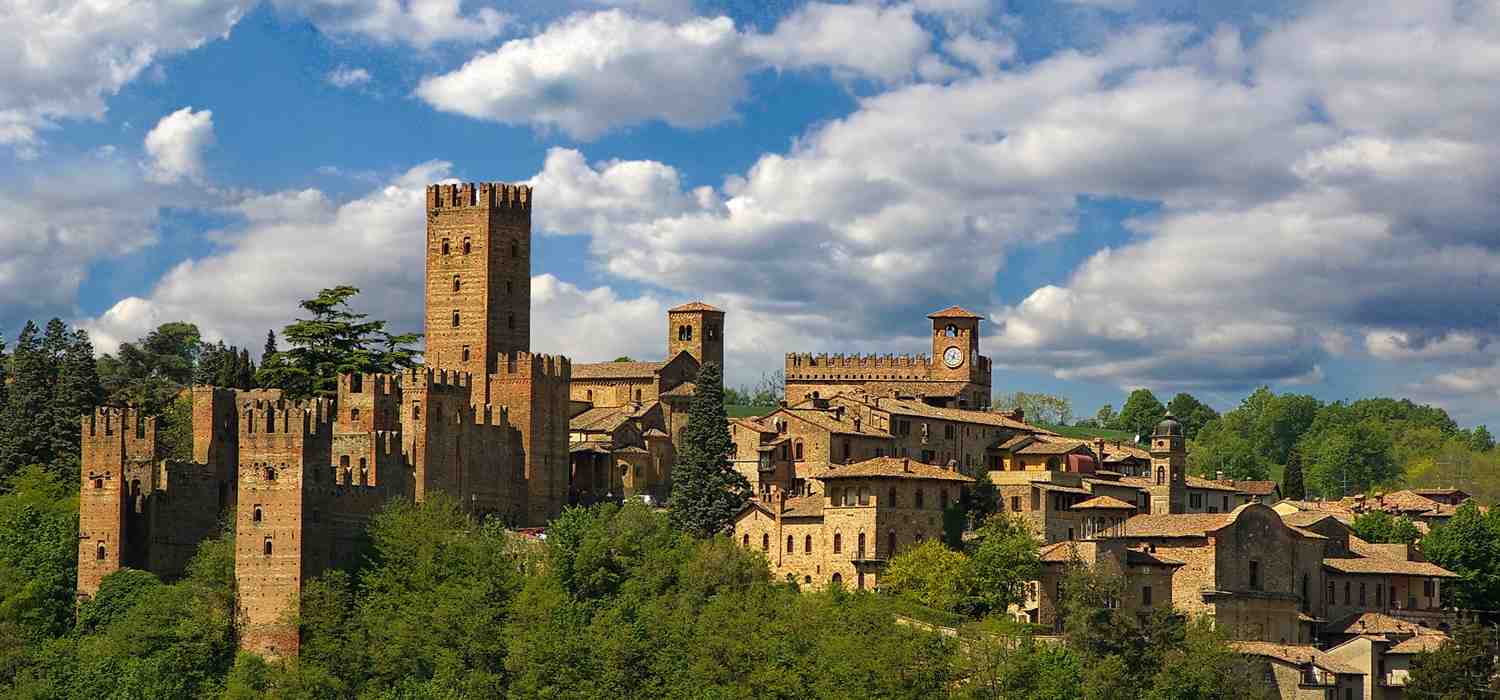
Castell'Arquato is the village I always recommend first. Just eleven kilometres from the Podere, perched on the hill overlooking the Arda Valley, it's one of Italy's Most Beautiful Villages and holds the Touring Club's Orange Flag. But above all, it's a place that truly impresses: when you climb to the upper square and find yourself facing the Visconti Fortress, the Romanesque Collegiate Church and the Podestà Palace all together, the effect is unforgettable.
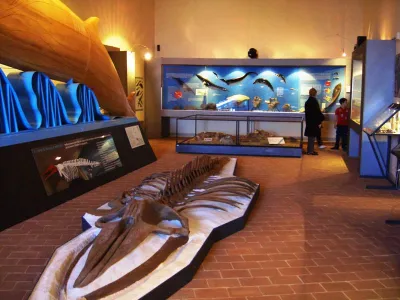
The Visconti Fortress, built in 1342, is open to visitors and from the top of the keep you can enjoy an extraordinary view across the valley to the plain. On clear days you can see the Alps. The Collegiate Church of Santa Maria Assunta, with its sandstone naves and capitals each different from the next, is a Romanesque gem that deserves time and silence. And the Cortesi Geological Museum, housed in the ancient Hospital of the Holy Spirit, tells an even older story: that of marine fossils from the Piacenzian age, when this area was under the sea.
Practical info — Castell'Arquato
Distance: 11 km from the Podere — Visit time: half a day on foot
Visconti Fortress: €5 adults, €4 reduced
Collegiate Church: free entry
Geological Museum: check opening times on the museum website
Don't miss: Monterosso Festival (April), Rivivi il Medioevo (September)
Official website · Google Maps
My advice is to arrive early in the morning, when the alleyways are quiet and the light is perfect. Wine lovers should know that we're in the Monterosso DOC area, the typical white wine of the Arda Valley (read more in the wine guide): in April the village celebrates its dedicated festival, with tastings right in the streets. In September there's "Rivivi il Medioevo" (Relive the Middle Ages), a lively historical re-enactment with processions, tournaments and medieval cuisine.
Vigoleno: the village of lovers
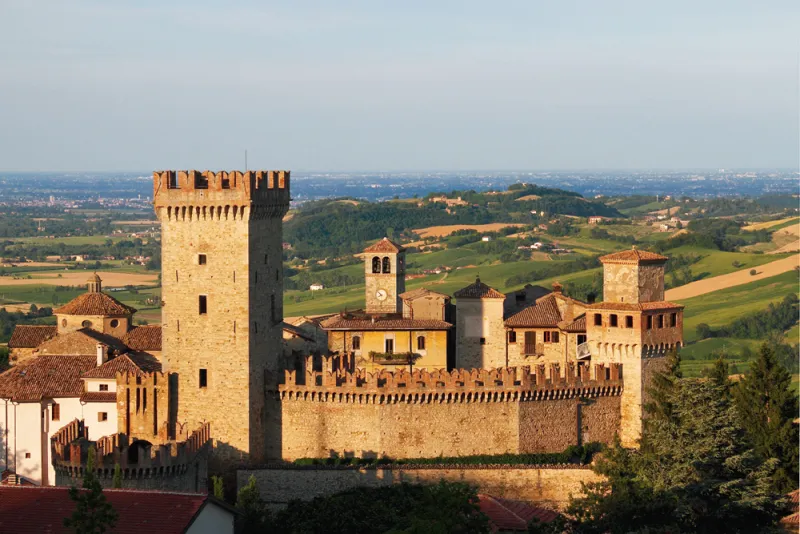
If Castell'Arquato is the postcard village, Vigoleno is the one that surprises. You can reach it from the Podere in fifteen minutes along a scenic road through Bacedasco — the drive alone is worth it. Then you park outside the walls, pass through the single gate of the barbican and find yourself inside a completely intact fortress-village, enclosed within its crenellated walls like a time capsule.
Vigoleno is small: you can walk around it in an hour. But it's precisely this intimacy that makes it special. The forty-two-metre keep offers a panorama over the Stirone hills that's among the most beautiful in the area. The Romanesque Parish Church of San Giorgio, with its bas-relief of the saint and the dragon, is one of the best preserved in the Piacenza region. And then there's the eighteenth-century miniature theatre inside the castle: twelve seats, considered the smallest in Europe, commissioned by Princess Ruspoli who in the 1920s transformed Vigoleno into her cultural salon, hosting D'Annunzio, Cocteau and Max Ernst within these walls.
Practical info — Vigoleno
Distance: 7.5 km from the Podere — Visit time: 1–2 hours
Keep: €4.50 adults, €3.50 reduced (self-guided)
Full guided tour with noble floor: €9.50
Parish Church of San Giorgio: free entry
Don't miss: Vin Santo di Vigoleno DOC at the producers' wine shop
Official website · Google Maps
Vigoleno's real secret, though, is the sunset. Come towards evening, when the raking light turns the walls honey-coloured and the valley fills with subtle hues. It's the perfect moment for a glass of Vin Santo di Vigoleno — a rare dessert wine, one of Italy's smallest DOC areas by vineyard size, made from grapes grown on the hills around the village. You'll find it at the producers' wine shop, right inside the walls.
Scipione Castle: a thousand years, one family
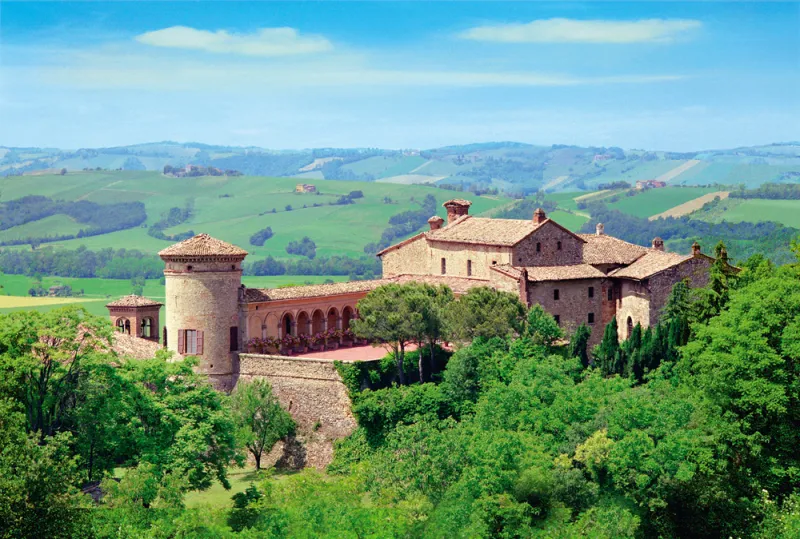
About ten kilometres from the Podere, on the road to Salsomaggiore, Scipione Castle is the oldest in the province of Parma: it was built before 1025 by the Marquises Pallavicino. And the extraordinary thing is that their direct descendants still live there today, after a thousand years. This isn't a museum: it's a home where history is a family affair.
The guided tour takes you through furnished rooms with fifteenth-century coffered ceilings, seventeenth-century frescoes, the famous "Devil's Parlour" with its trompe-l'œil paintings and the small door that opens onto the secret passage. The ancient dungeons in the cylindrical tower are still intact, reached by a spiral staircase that sends a shiver down your spine.
Practical info — Scipione Castle
Distance: 9.8 km from the Podere — Visit time: 1–1.5 hours (guided tour)
Guided tours: Saturdays, Sundays and holidays (March–November)
By reservation for groups all year round
Tel. +39 0521 823221 — Dogs welcome on a lead
Official website · Google Maps
The Abbey of Chiaravalle della Colomba
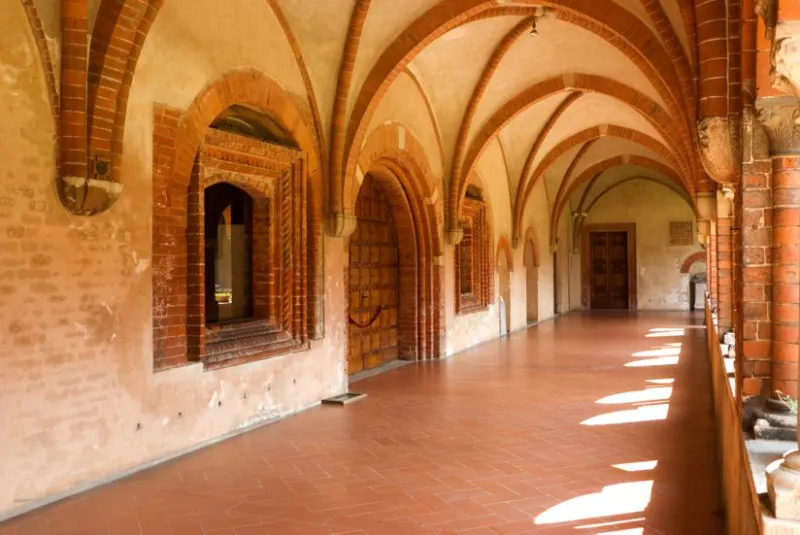
Before venturing further, a stop that isn't a village but deserves a place in this guide: the Abbey of Chiaravalle della Colomba, in Alseno, our own municipality. It's the oldest Cistercian monastery in Emilia-Romagna, founded in 1136 at the behest of Saint Bernard of Clairvaux himself.
Legend has it that a white dove showed the monks the exact spot to build. The Gothic cloister is intact on all four sides — an absolute rarity among Cistercian abbeys — and the brick basilica, with its sober yet powerful lines, is a place that invites silence. Today the Abbey is still home to monks, who produce liqueurs from secret recipes. The event of the year is the Corpus Domini Infiorata (May/June), when the entire nave is covered with a carpet of flower petals.
Practical info — Abbey of Chiaravalle della Colomba
Distance: 6.7 km from the Podere — Visit time: 1–2 hours
Open daily 8:30–12:00 / 14:30–18:30
Free entry (donations welcome)
Official website · Google Maps
Beyond the hills: the great fortresses of the Ducato
The villages near the Podere are just the beginning. Widening the range to 30–70 km takes you into the heart of the Castelli del Ducato circuit, with some of the most spectacular fortresses in northern Italy. These are half-day or full-day trips, perfect for guests staying several nights.
Torrechiara: the castle of love
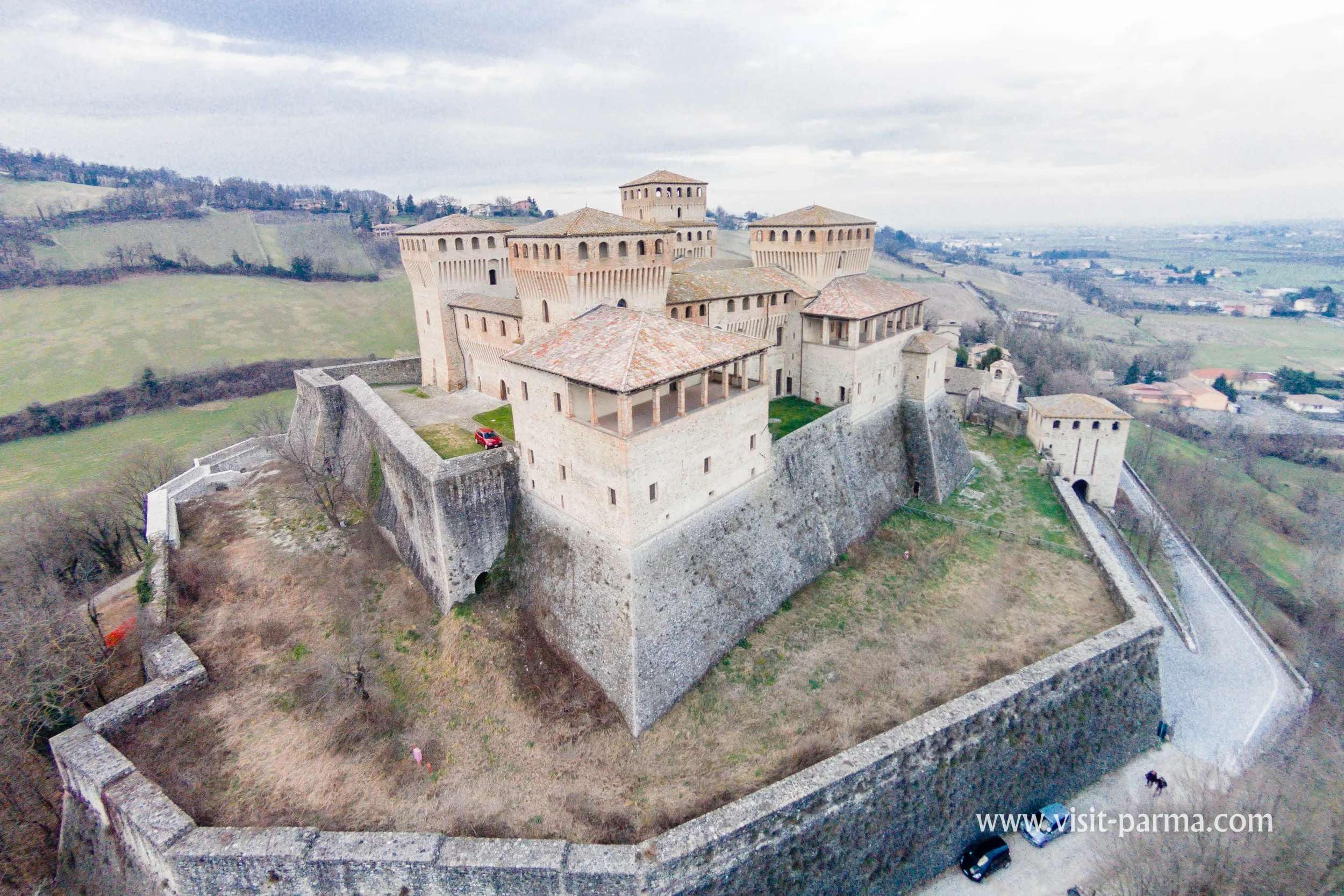
Torrechiara Castle is arguably the most beautiful and iconic in all of Emilia. It rises on a hill overlooking the Parma valley, with four corner towers and a double ring of walls that look like something from a storybook. It was built between 1448 and 1460 by Pier Maria Rossi as a fortress and a declaration of love for Bianca Pellegrini. Their story is told in the famous Camera d'Oro (Golden Chamber) on the piano nobile: a cycle of frescoes by Benedetto Bembo where Bianca journeys through the Rossi castles, in a landscape of golden hills. One of the most moving love monuments of the Italian Renaissance. From the towers, the panorama sweeps over the plain and the Apennines.
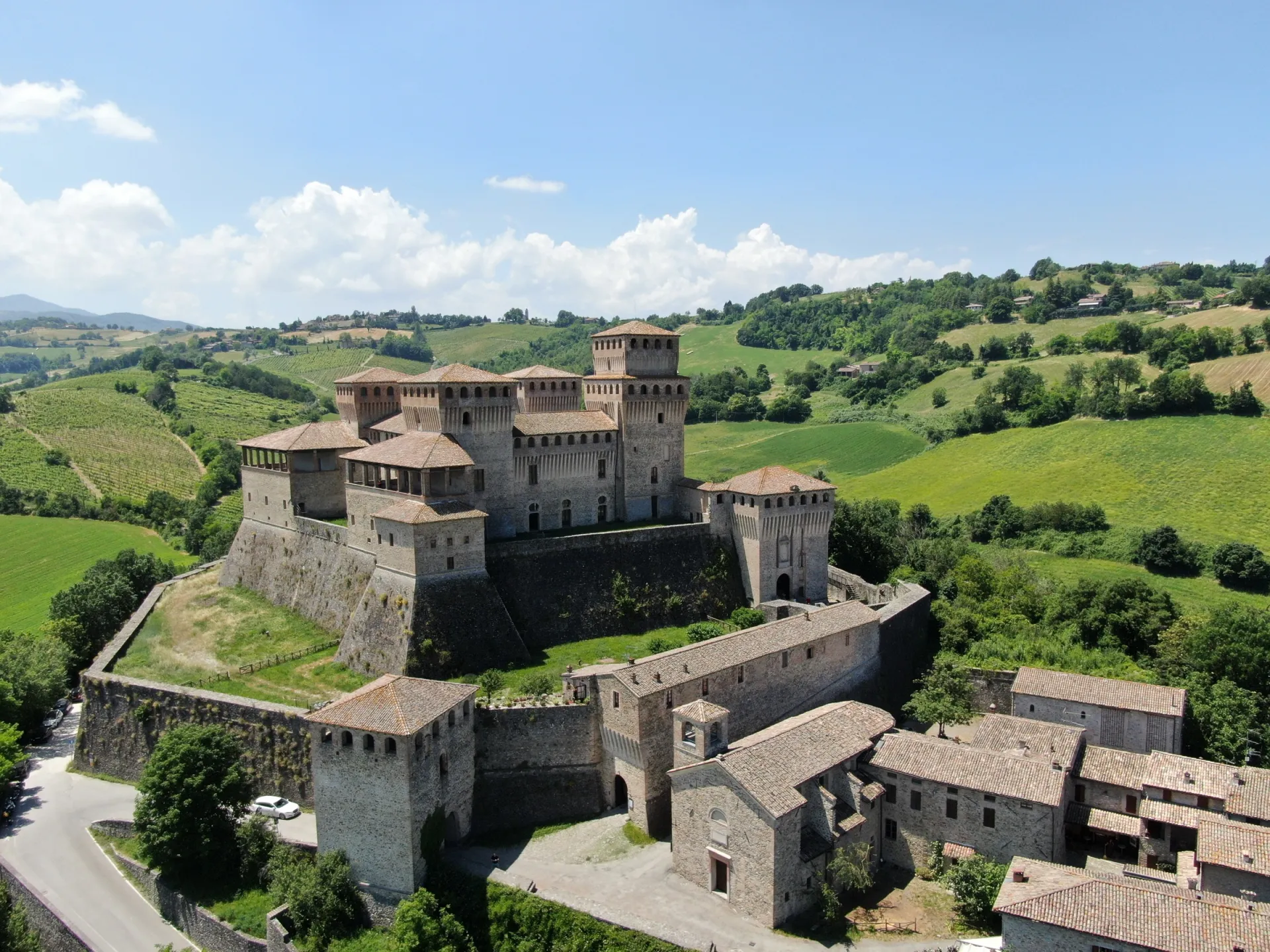
Easily combined with Parma (20 minutes) or with the Langhirano area, home of prosciutto di Parma — the Prosciutto Festival is held in September. Allow 1–1.5 hours for the visit.
Rivalta: the inhabited castle and its ghost
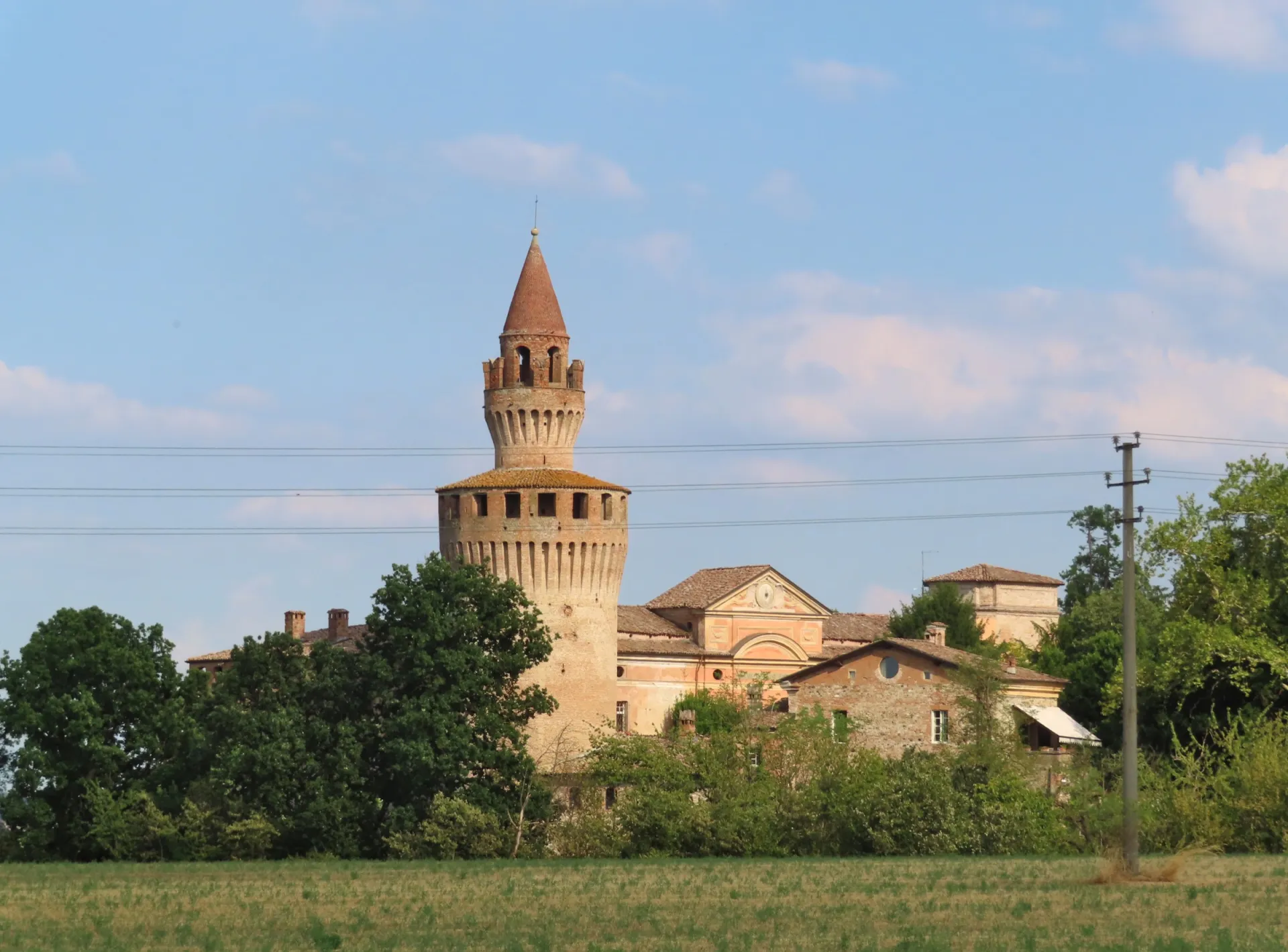
Rivalta Castle is perched on a cliff above the Trebbia river. It has been home to the Zanardi Landi family since the 15th century and is still their private residence — which gives it a lived-in warmth that museum-castles lack. Guided tours lead through furnished rooms spanning centuries of family life, from the medieval kitchen to the 18th-century salons. The most famous resident is the ghost of Giuseppe, a castle cook who met a tragic end over a love affair with the marchioness. The medieval village at the foot of the castle is beautifully preserved, with restaurants and a small hotel.
Combine it with a swim in the Trebbia in summer or with Grazzano Visconti (15 minutes). Tours on weekends and holidays.
Soragna: elegance and Parmigiano Reggiano
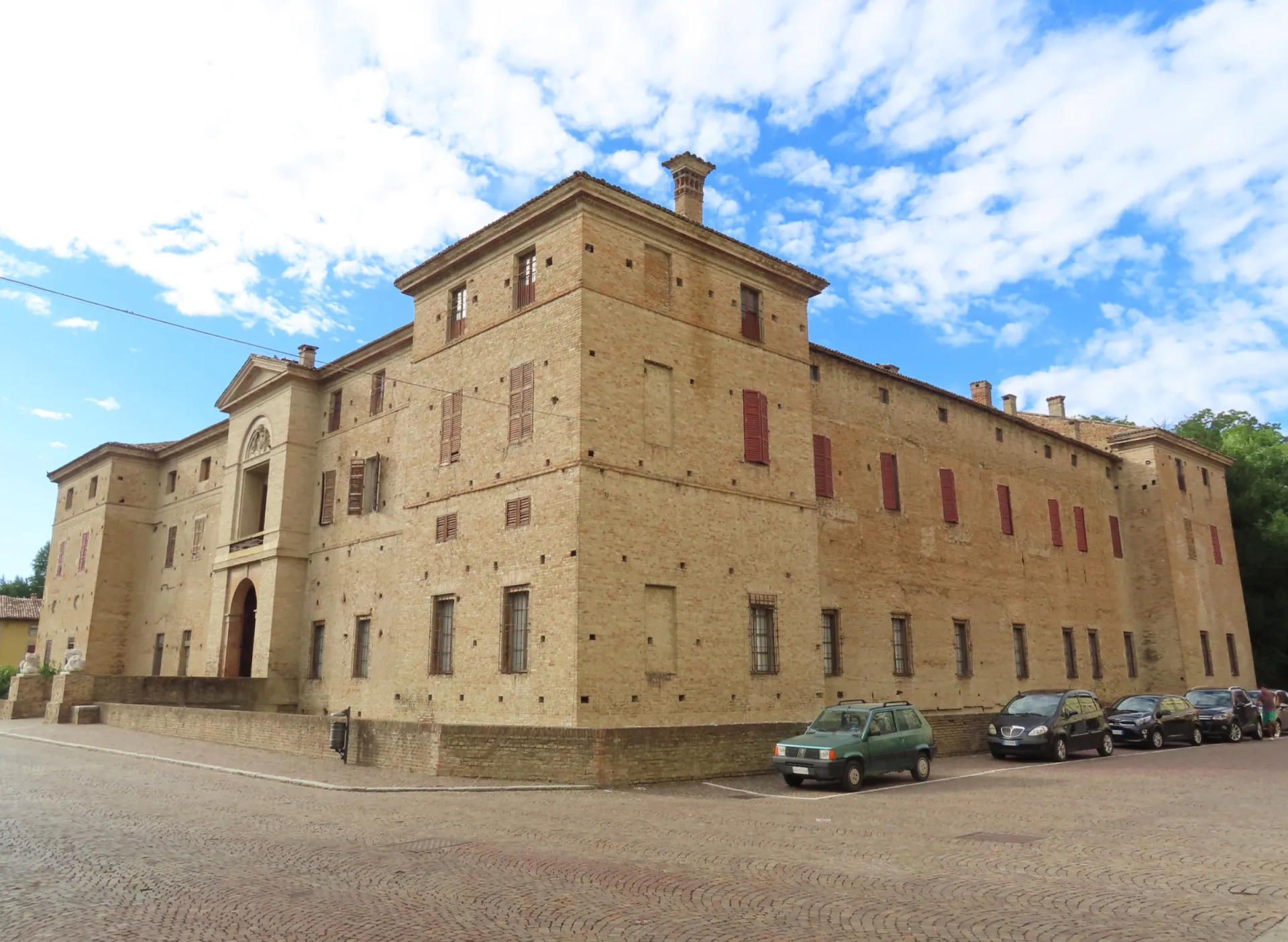
The Rocca Meli Lupi of Soragna is one of the most elegant in the area — uninterrupted home of the same family since 1385. Unlike many castles turned into museums, here you feel the atmosphere of a noble home still lived in. Guided tours take you through rooms with original furnishings from the Renaissance to the 19th century: the Sala delle Grottesche, the Gallery of the Knights of Malta, the 18th-century apartments. Just outside the castle is the Museo del Parmigiano Reggiano, in a former cheese factory. Pairs perfectly with Fontanellato and the Masone Labyrinth (both within 10 km).
Bobbio: the village of the Devil's Bridge
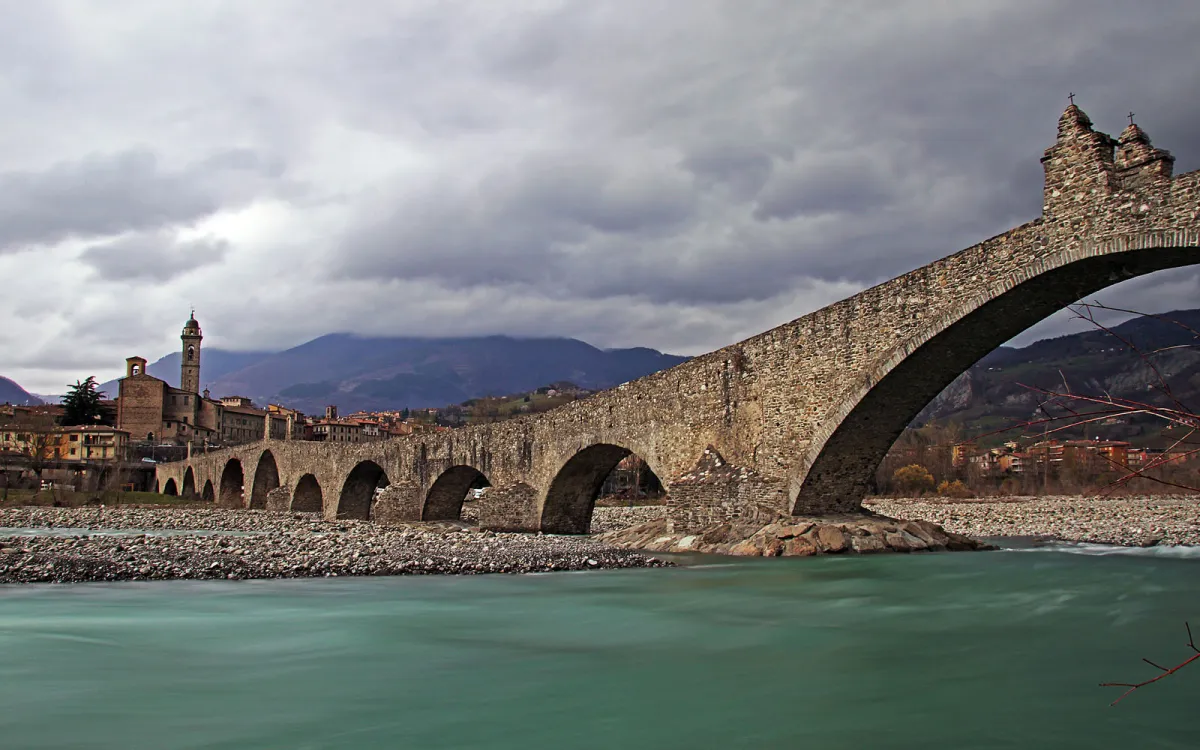
Bobbio is the furthest destination in this guide (65 km, about an hour and a quarter) but worth every minute of the drive — the road follows the Trebbia through increasingly beautiful scenery. It's one of the Most Beautiful Villages in Italy, with the famous Ponte Gobbo (Devil's Bridge), an 11-arch bridge with an irregular profile that zigzags across the river. Legend has it the devil built it in one night — but Saint Colombanus tricked him by sending a dog.
The real treasure is the Abbey of San Colombano, founded in 614 by the Irish monk and for centuries one of the most important cultural centres in Europe. The old town is a pleasure to walk through: cobbled streets, medieval houses, good restaurants. In summer the Trebbia offers pebbly beaches for swimming. On the way there or back, stop at Rivalta Castle.
Bardi: the fortress on the Apennines
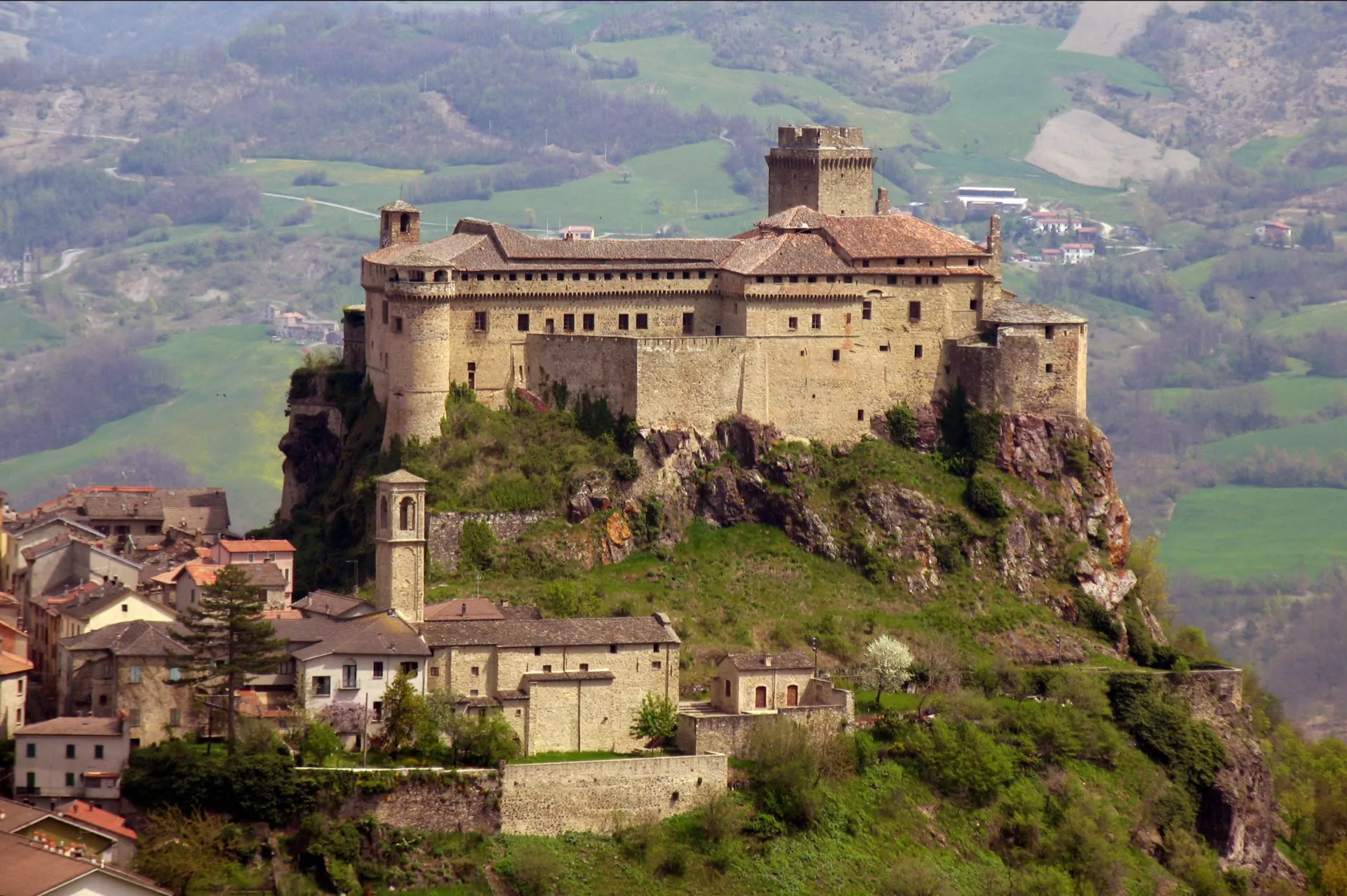
Bardi Castle is the most dramatic fortress in the circuit: an immense mass of red stone perched on a spur of jasper 600 metres above the confluence of the Ceno and Noveglia rivers. The scale is impressive: walls up to four metres thick, massive towers, a huge courtyard, dungeons. Bardi is famous for the ghost legend of Moroello, a knight who threw himself from the tower believing he had lost his beloved Soleste.
The town is a small, genuine mountain settlement with trattorias serving hearty Apennine cooking: mushroom pasta, polenta, game. The road to get there is beautiful, winding through chestnut forests and small villages. Allow a full day.
How to plan your visit
From the Podere, all these places are easily reachable. Here's how I combine them:
- Castell'Arquato + Vigoleno — perfect for a full day: morning at the first, afternoon at the second, with lunch at one of the trattorias I recommend in the restaurants section
- Scipione Castle + Salsomaggiore — ideal half-day, with the option of a stroll through the Art Nouveau centre of Salso
- Abbey of Chiaravalle — perfect for a visit of a couple of hours, best early in the morning
- Torrechiara + Langhirano (or + Parma) — half-day or full day, castle and prosciutto
- Rivalta + Grazzano Visconti — half-day between the Trebbia and the neo-medieval village
- Soragna + Fontanellato + Masone Labyrinth — full day in the Parma lowlands: castles, Parmigiano and bamboo
- Bobbio (full day) — the journey is part of the experience, with a possible stop at Rivalta
- Bardi (full day) — the mountain trip, between castles and Apennine cooking
If you'd like a ready-made route with timings and suggestions, check out our recommended itineraries.
Places map
To view the map, please accept map cookies.