The wines of the Colli Piacentini: a guide to discovery
Wine country for three thousand years
From the Podere, just a few minutes' drive towards Bacedasco takes you into the heart of the Piacenza hill vineyards. This has been wine country for millennia: nineteenth-century archaeological digs at the Montata dell'Orto terramare site, here in Castelnuovo Fogliani, unearthed fossilised vine roots and grape seeds dating back to between the 20th and 7th centuries BC. The Romans founded Piacenza in 218 BC and quickly turned it into a wine-producing centre: Cicero in the Roman Senate accused the Piacenza senator Piso — father of Calpurnia, Julius Caesar's wife — of drinking overly generous cups of Piacenza wine. At Veleia Romana, the archaeological city on the hills not far from here, veteran legionaries received plots of land and cultivated vines. Wine was so central to life in this area that a silver vessel decorated with vine tendrils and grape clusters, found in the Piacenza territory in 1878, would give its name to the most famous local wine: Gutturnio.
The tradition has never been broken since. The monks of Bobbio Abbey kept it alive through the Middle Ages. The farmers of these hills passed it down through the generations. And in 1967, Gutturnio became one of the very first Italian wines to receive the DOC designation — the seventh in the entire country.
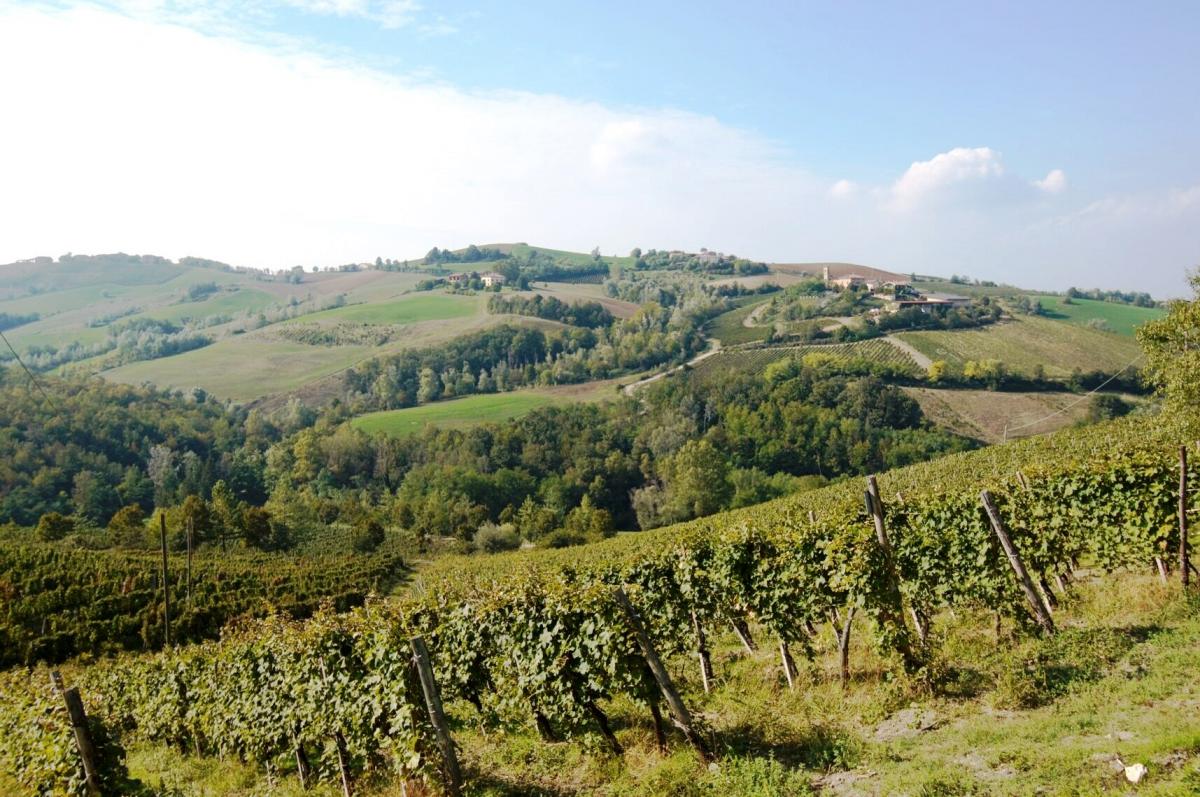
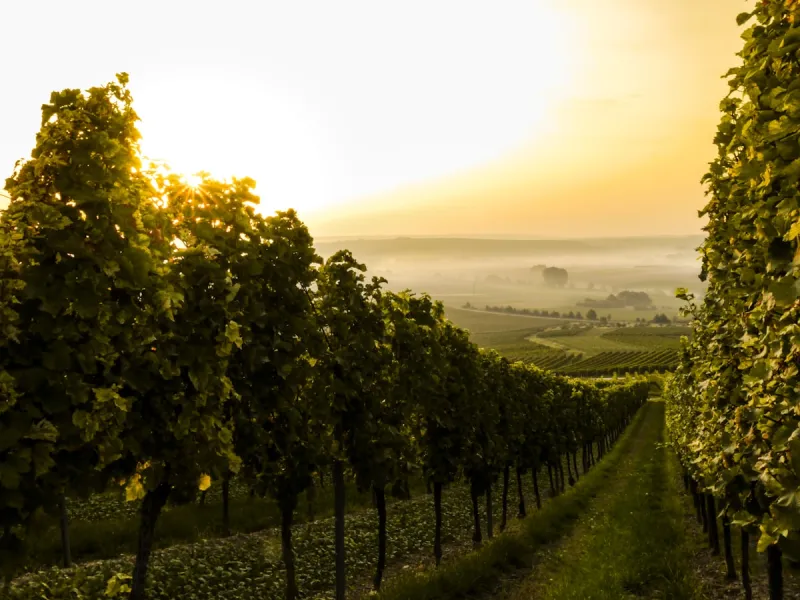
Today, the Colli Piacentini DOC denomination covers the hilly territory of twenty-four municipalities in the province of Piacenza, including Alseno, the municipality where the Podere is located. The vineyards grow on clay and limestone soils, facing the sun, at altitudes between 150 and 400 metres, with slopes that help drainage and concentrate sugars in the grapes. The result is authentic, terroir-driven wines, still largely unknown outside the region — which makes them a genuine discovery for anyone visiting.
Three wines you should know
Gutturnio — the red with a story fit for a novel
Gutturnio is the emblematic red wine of this area and the first one I'd recommend you try. The story behind its name reads like a little archaeological mystery. In 1878, a silver vessel decorated with vine and grape motifs was found in the Piacenza territory. Antonio Bonora, the local inspector for the conservation of antiquities, described it as a large cup holding about two litres, and called it a gutturnium, linking it to the excavations at Veleia Romana. For decades it was believed to be a banquet jug used to close grand Roman dinners. More recent research has challenged this interpretation — it was probably a smaller object, an urceolus, a small pitcher used during the symposium to mix wine with water. But it hardly matters: in 1938, the oenologist Mario Prati, director of the Provincial Viticulture Consortium, proposed naming the traditional Piacenza red after that evocative vessel, and the name stuck. In 1967, with the DOC certification, Gutturnio officially entered the history of Italian wine.
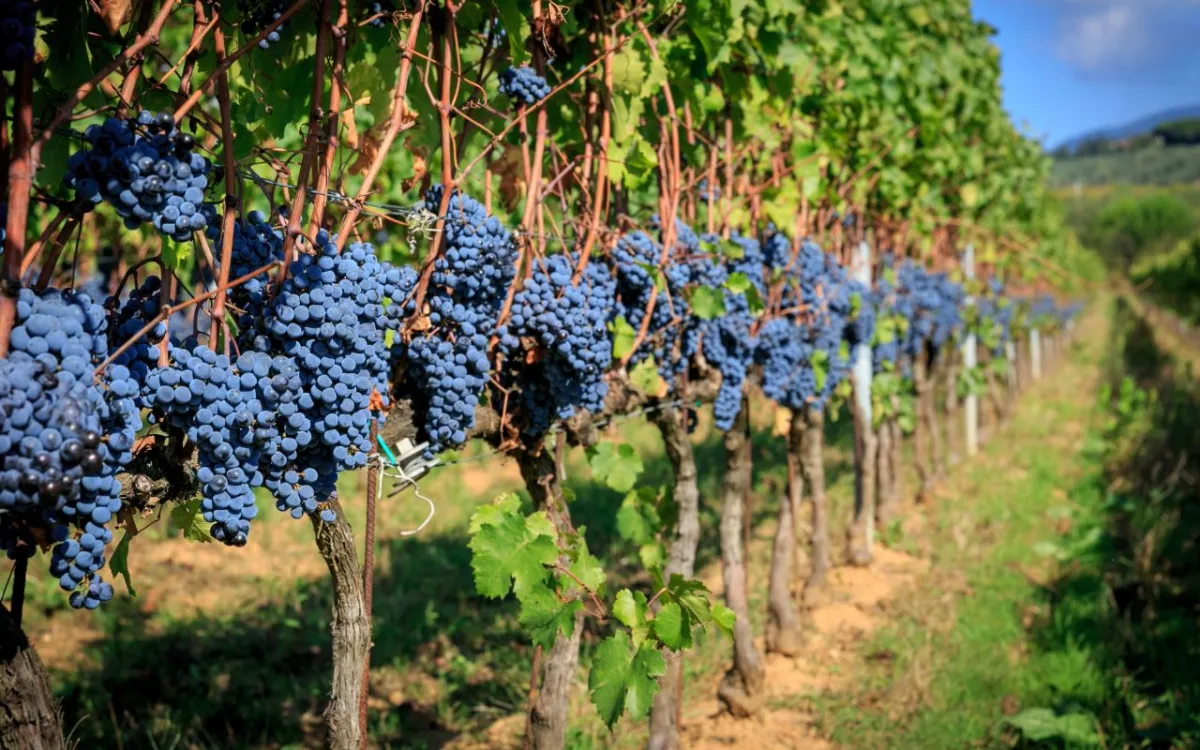
Gutturnio is a blend of Barbera grapes (55-70%) and Croatina (30-45%), the latter locally called Bonarda. Barbera brings acidity and structure, Croatina adds softness, deep colour and tannins. Together they produce a balanced wine with a brilliant ruby-red colour.
There are several versions, and it's worth knowing them:
- Gutturnio Frizzante — the most popular version, light and easy-drinking. It's the everyday wine on Piacenza tables: perfect with cured meats, torta fritta and pasta dishes. Serve it slightly cool, around 14-16°C. You'll often spot it in the short, squat bottle sealed with string — the so-called "spago bottle", an icon of Piacenza winemaking
- Gutturnio Superiore — still, more structured, with at least 12.5% alcohol. Available from the spring following the harvest. Pair it with red meats, roasts and aged cheeses
- Gutturnio Riserva — the noblest version, aged for at least twenty-four months. A complex, contemplative wine that can surprise even those accustomed to the great reds of Piedmont and Tuscany
Ortrugo — "the other grape" that became the star
Ortrugo has a story that says a lot about the character of this land: a story of patience and rediscovery. Its name comes from the Piacenza dialect artruga or altruga, which literally means "the other grape" — the one without a name of its own, the one used only to correct other wines, to add freshness and acidity to more distinguished whites. For centuries, Ortrugo was a supporting player, a variety without an identity.
The first documented mention dates to 1818, when Bramieri referred to it as "altruga". In 1927, Professor Toni gave it its definitive name in the pages of the journal Italia Agricola, listing it among the main white grape varieties of the province. But nobody thought of making a wine from it alone. When the DOC Colli Piacentini was established in 1967, Ortrugo had almost disappeared, overshadowed by Malvasia di Candia aromatica and the reds.
It was only in the early 1970s that a few Piacenza winemakers — notably the Mossi family in Albareto, Ziano — selected surviving old vines and began vinifying Ortrugo on its own. The University of Piacenza took an interest, new clones were developed, and through the 1980s the variety was replanted across the territory. Today Ortrugo is the most widely grown white in the Piacenza area, with around six hundred hectares under vine — an indigenous grape found practically nowhere else in Italy.
The wine is fresh and light, pale straw-yellow with greenish highlights, dry with a characteristic slightly bitter finish. You'll almost always find it sparkling: this is the white that locals drink with torta fritta, cured meat starters and fish. Since 2010 it has had its own specific designation covering three styles: still, sparkling and spumante.
Malvasia — the perfume of the hills at the table
Malvasia di Candia Aromatica is the grape variety that most captures the scent of these hills. The name "Malvasia" stretches across the whole Mediterranean and traces back to the Greek town of Monemvasia, in the Peloponnese, from where these grapes are thought to have begun their journey centuries ago. But the Malvasia grown here has a character all its own: it's one of the most fragrant varieties in Italy, with an aromatic profile that includes citrus, white flowers, ripe fruit, honey and spice.
Malvasia's role in the food culture of the Piacenza table is central. In its sweet, sparkling version, it's the wine that closes the meal: the one you drink with desserts, with fruit, with homemade sbrisolona cake. It's the wine of family celebrations, of Sunday lunches that stretch into the afternoon. In its dry version it's an elegant, aromatic aperitif, perfect with fish dishes or as a welcome on a summer evening.
There's also a passito version, made from dried grapes, rarer and more concentrated — a contemplative wine worth seeking out.
More wines to discover
Barbera and Bonarda on their own
Beyond Gutturnio, the two grape varieties that compose it are also vinified separately. Barbera dei Colli Piacentini is a bold red with lively acidity and good structure, excellent with the richer dishes of local cuisine. Bonarda dei Colli Piacentini — which here refers to the Croatina grape, different from Piedmont's Bonarda — is softer and fruitier, often sparkling, a pleasant and versatile red.
Vin Santo di Vigoleno — a hidden treasure
If you visit the village of Vigoleno — and I recommend you do, it's one of the most beautiful villages in the area — ask about Vin Santo di Vigoleno. It's one of Italy's smallest DOC areas: a white passito wine made from dried grapes, with an intense golden colour, aromatic and complex. Production is tiny and just finding a bottle is an experience in itself. If you do, buy it: it's an extraordinarily rare piece of wine-making history.
Monterosso Val d'Arda — our valley's white
Monterosso Val d'Arda is a wine worth knowing, because it's literally the white of our valley. Named after a hill near Castell'Arquato, it's produced only in the municipalities around us: Alseno, Castell'Arquato, Carpaneto, Vernasca, Gropparello, Lugagnano. It's a blend of Malvasia, Moscato Bianco, Ortrugo and Trebbiano: a fine white with a delicate perfume and a taste ranging from dry to slightly off-dry. Try it with fish or fresh cheeses.
Tasting at the winery: Il Casello
You only truly understand the wines of a territory in one way: by going to a winery. Reading about Gutturnio, Ortrugo and Malvasia is a start, but no description can replace the moment you taste a wine in the place where it was born, surrounded by the same hills that nourish the vines.
The winery I recommend is Il Casello, in Bacedasco Basso in the municipality of Vernasca, less than five kilometres from the Podere — about a ten-minute drive through the hills, and the drive itself is beautiful.
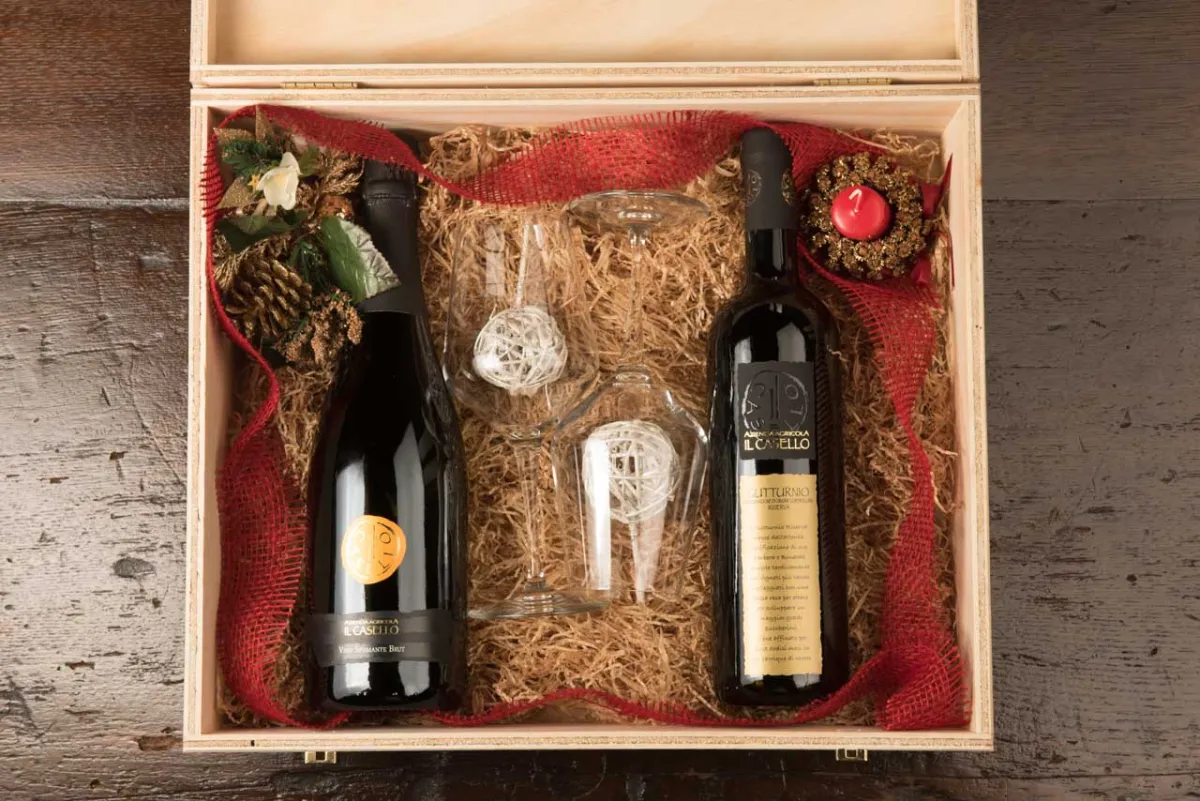
Il Casello belongs to the Rigolli family, who have been growing vines and making wine here since 1950. They're now in their third generation, with the arrival of Sofia, who leads the tastings and speaks English — making the experience fully accessible to international guests. Their eighteen hectares of vineyards all lie around Bacedasco, at 250 metres above sea level, trained using the guyot method. They produce all the main Piacenza DOC wines: among the reds, Gutturnio (still and sparkling), Barbera and Bonarda; among the whites, Ortrugo and Malvasia in both dry and sweet versions. They also have a special range called "Linea Spago" and some select bottles, including a notable Gutturnio Riserva and a passito.
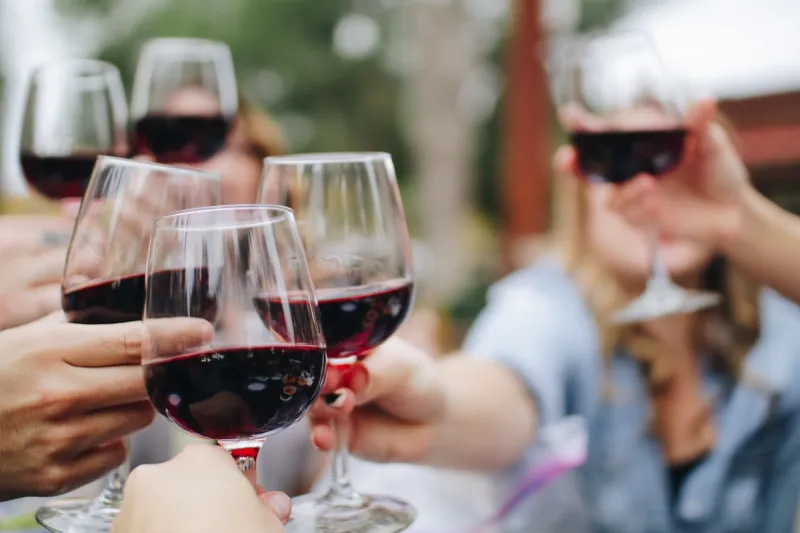
What I recommend is the winery tasting experience: they welcome you like old friends, let you taste their wines and often prepare a board of local produce to accompany the tasting — cured meats, Parmigiano Reggiano, and other local specialities. This isn't a polished tourist experience: it's the genuine hospitality of a farming family who love their work and share it with pleasure. Wine prices are fair and you can buy directly — winery prices are significantly better than retail.
If you're wondering where to start, my personal favourites are the Gutturnio Superiore and the dry Malvasia — but let Sofia guide you, she'll know what to recommend based on your tastes.
Practical info — Cantina Il Casello
Address: Via Fontana 65, Bacedasco Basso, Vernasca (PC)
Distance from the Podere: about 5 km (10 minutes by car)
Phone: +39 0523 895459
Email: info@aziendailcasello.it
Website: www.aziendailcasello.it
Important: call or write in advance to book a tasting. The winery also offers a tasting room, vineyard visits and direct sales. Sofia speaks English.
How to drink local during your stay
Even without visiting a winery, you can easily enjoy local wines during your stay at the Podere:
- At local trattorias — all the restaurants I recommend in the guide serve Colli Piacentini wines, often by the glass. Ask for a Gutturnio frizzante with your first course or an Ortrugo with the antipasto: it's the most natural way to pair them
- At local shops — Pane e Salame in Castelnuovo Fogliani and the Conad in Alseno both carry a selection of local bottles at very accessible prices
- At dinner in your apartment — one of the loveliest things about staying at the Podere is making a simple dinner with produce bought during the day. A bottle of sparkling Ortrugo, a board of coppa and Parmigiano, bread from Sapore di Grano: the territory on your table
A short glossary to help you navigate
If Piacenza wines are new to you, here are a few useful terms:
- Frizzante — slightly sparkling wine, very common in this area. It's not spumante: the bubbles are finer and more delicate
- Fermo — still wine, without bubbles
- Superiore — a version with a higher alcohol content and stricter production rules
- Riserva — wine aged for longer (at least 24 months for Gutturnio)
- Bonarda — note: in the Piacenza area this name refers to the Croatina grape, different from Piedmont's Bonarda
- DOC — Denominazione di Origine Controllata, the certification guaranteeing origin and production method
- Spago — the traditional short bottle sealed with string, typical of Piacenza's sparkling wines
Places map
To view the map, please accept map cookies.