Salsomaggiore and its Art Nouveau heritage
A spa town reborn
Just twelve kilometres from the Podere, Salsomaggiore Terme is a town that defies expectations. Most people drive through it on the way to the hills without stopping. That's a mistake. Because Salsomaggiore hides one of Italy's most extraordinary Art Nouveau heritage, built during the Belle Époque when this small town was one of Europe's most fashionable spa destinations — a rival to Baden-Baden, Vichy and Karlovy Vary.
The salt-rich thermal waters of Salsomaggiore were known since Roman times, but the town's golden age came between 1890 and 1930, when wealthy visitors from across Europe — aristocrats, the upper bourgeoisie, the Italian royal family — flocked here for the cure. In a few decades, grand hotels, theatres, parks and above all the monumental Terme Berzieri were built in an exuberant Art Nouveau and Art Deco style that still takes the breath away today. Walking through the centre of Salsomaggiore is like crossing an open-air museum of early 20th-century architecture.
Galileo Chini: the artist who shaped Salsomaggiore
To understand Salsomaggiore's Art Nouveau, you need to know one name: Galileo Chini (Florence, 1873–1956). Painter, ceramist, decorator and set designer, Chini was one of the leading figures of the Italian Liberty style. But his genius had something unique: between 1911 and 1914 he lived in Bangkok, where he decorated the Throne Room of the Royal Palace for the King of Siam. That Oriental experience — Chinese, Islamic and Hindu motifs — merged with the European decorative tradition and produced an unmistakable style of exoticism, gilding, mosaics and vibrant colours.
This is precisely what makes Salsomaggiore's Art Nouveau different from any other in Italy: not just the floral motifs and sinuous lines typical of Art Nouveau, but a powerful Oriental element that transforms interiors into settings from the Arabian Nights. Chini left his mark on at least three major buildings in the town — the Terme Berzieri, the Grand Hotel des Thermes and the Poggio Diana — and produced all the decorative elements in majolica, stoneware and polychrome glass at his own factory, the Fornaci Chini in Borgo San Lorenzo.
The Art Nouveau buildings: a walk through the historic centre
Salsomaggiore's main Art Nouveau buildings are all within the town centre, a few steps from each other. Here are the most significant ones, in the order you might encounter them on a stroll.
Palazzo delle Terme Berzieri (1923)
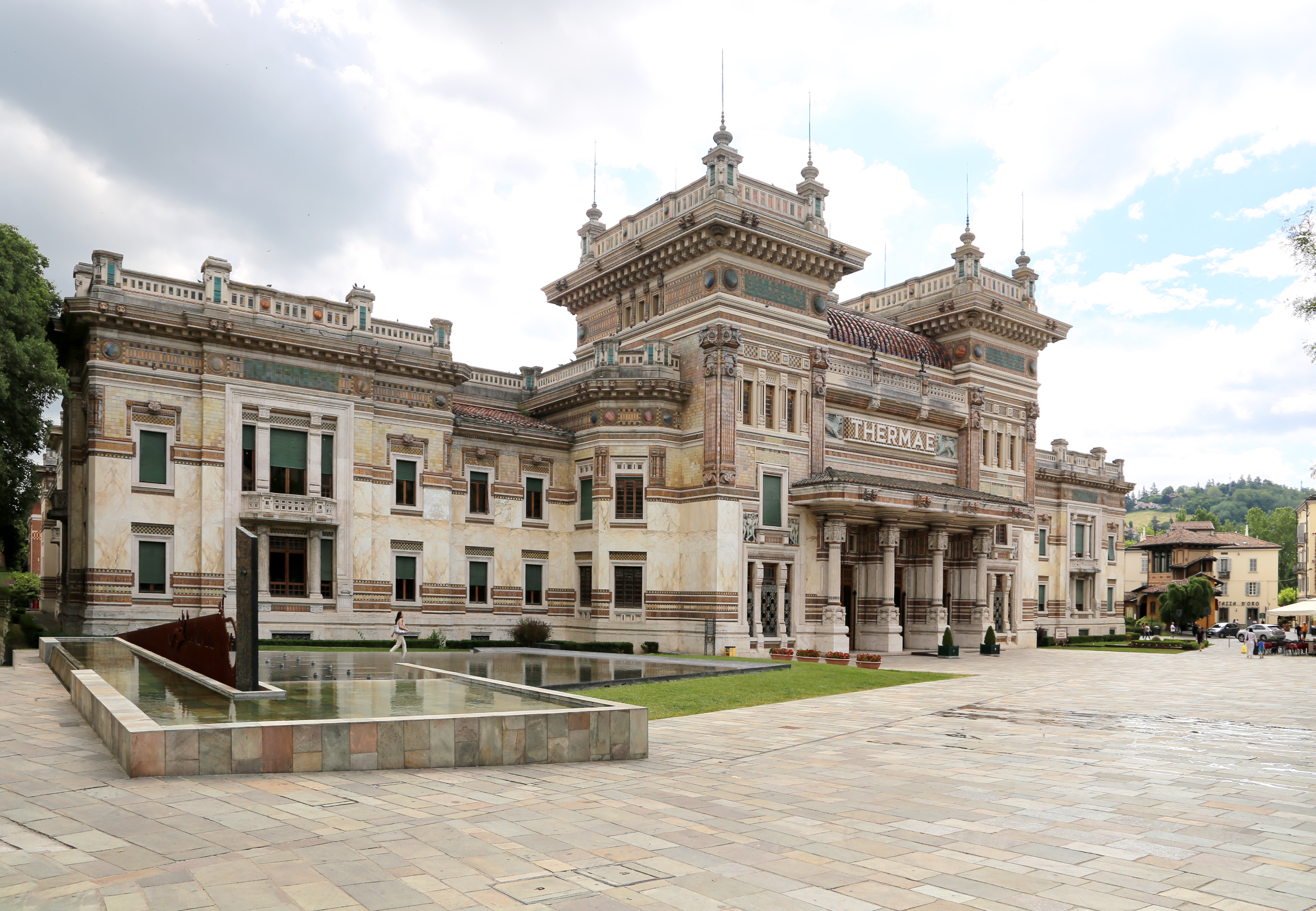
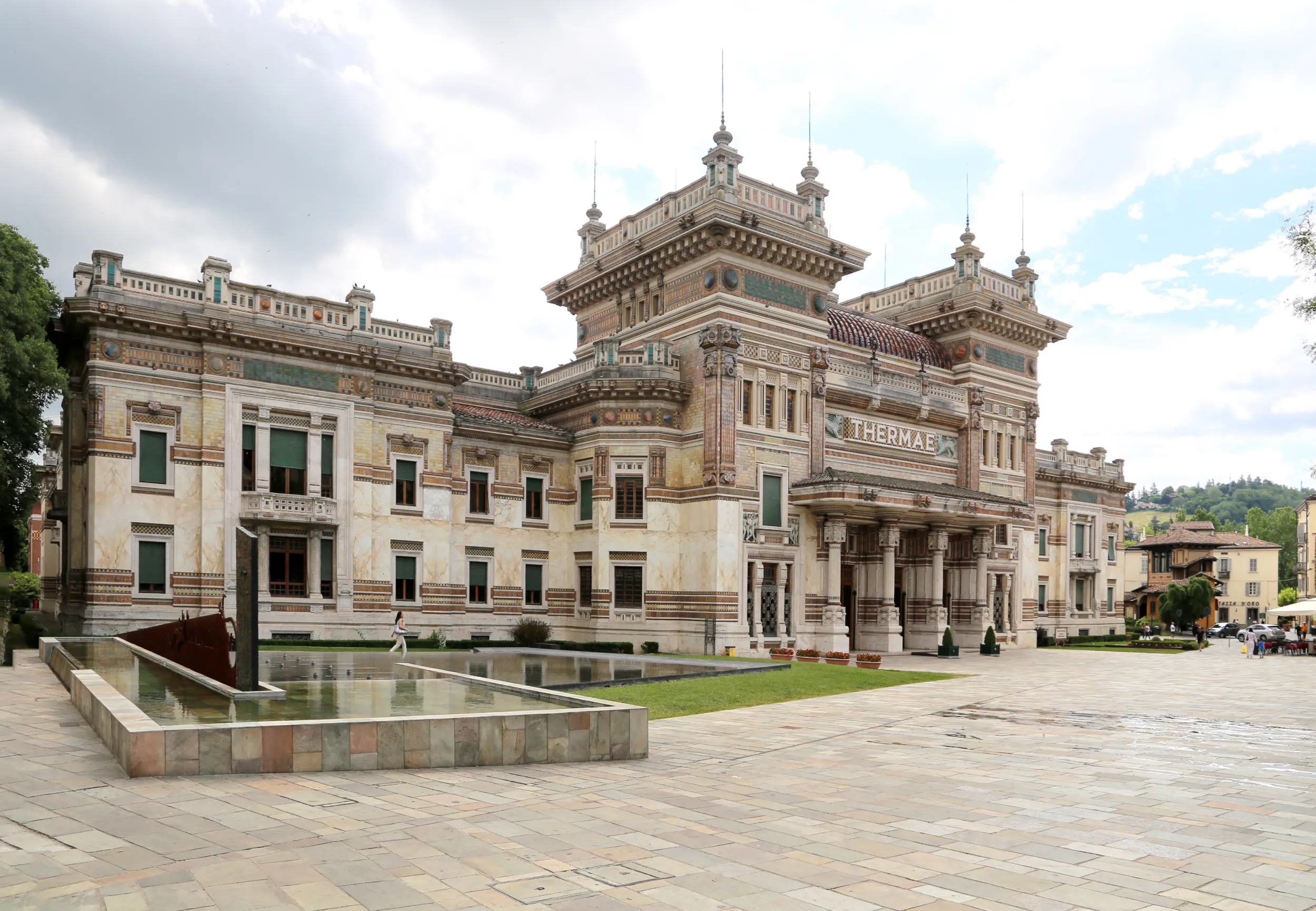
The absolute masterpiece. Designed by architects Ugo Giusti and Giulio Bernardini and decorated by Galileo Chini, the Palazzo Berzieri was inaugurated on 21 May 1923 after almost ten years of work (interrupted by the First World War). At its opening it was hailed as "the most beautiful baths in the world".
The facade is a thermal temple: monumental, symmetrical, with two chimeras flanking the word THERMAE — legend has it that the chimeras represent Giusti and Chini themselves, united in an artistic partnership that only ended with the architect's death. But it's the interior that leaves you speechless: a triumph of ceramic mosaics, Oriental motifs, gold leaf and polychrome glass, all produced by the Fornaci Chini. Every surface — walls, ceilings, columns — is decorated with an iconographic programme that celebrates the healing power of water through a language that blends East and West.
After years of closure and a restoration costing over 44 million euros, the palazzo reopened in December 2025 as QC Terme Salsomaggiore — Spa of Wonders. The meticulous restoration has brought Chini's decorations back to their original splendour. Today you can admire these masterpieces while soaking in the pools or simply by walking through the monumental entrance hall — an experience more akin to entering a museum than a spa.
Practical info — QC Terme Salsomaggiore (Palazzo Berzieri)
Piazza Lorenzo Berzieri · 12 km from the Podere
Hours: Sun–Thu 9:00–23:00, Fri–Sat 9:00–24:00
Entry includes: bathrobe, towel, slippers, evening aperitif
Not permitted: under 14s and pregnant women
Booking recommended on weekends
Official website · Google Maps
Gabbia del Pozzo Scotti (1912)
Right opposite the Berzieri, in Piazza Berzieri, stands a small jewel that many visitors overlook: the Gabbia del Pozzo Scotti, a hexagonal structure of wrought iron and glass covering an old artesian well. It was made in 1912 to a design by Giuseppe Boni (1884–1936) for the Dalla Rosa, Corazza & C. company. The ironwork features branches and leaves in pure Art Nouveau style — one of the finest pieces of Liberty craftsmanship in the town. The well itself, drilled in 1864, drew up salsobromoiodic water and represents over a century of spa history condensed into a few square metres.
Palazzo dei Congressi — formerly Grand Hôtel des Thermes (1901)
Continuing along Viale Romagnosi you encounter the other great Art Nouveau building of the town: the Palazzo dei Congressi, originally inaugurated in 1901 as the Grand Hôtel des Thermes. It was designed in 1898 by Milan architect Luigi Broggi with a distinctive horseshoe-shaped plan, four floors, and facades with alternating bands of exposed brick and floral ceramic decorations — the work of Gottardo Valentini.
At its opening, the hotel was purchased by none other than César Ritz (founder of the Ritz in Paris and London) together with Baron Pfyffer — a testament to the international status Salsomaggiore had achieved. The building boasted 300 rooms and hosted European aristocracy.
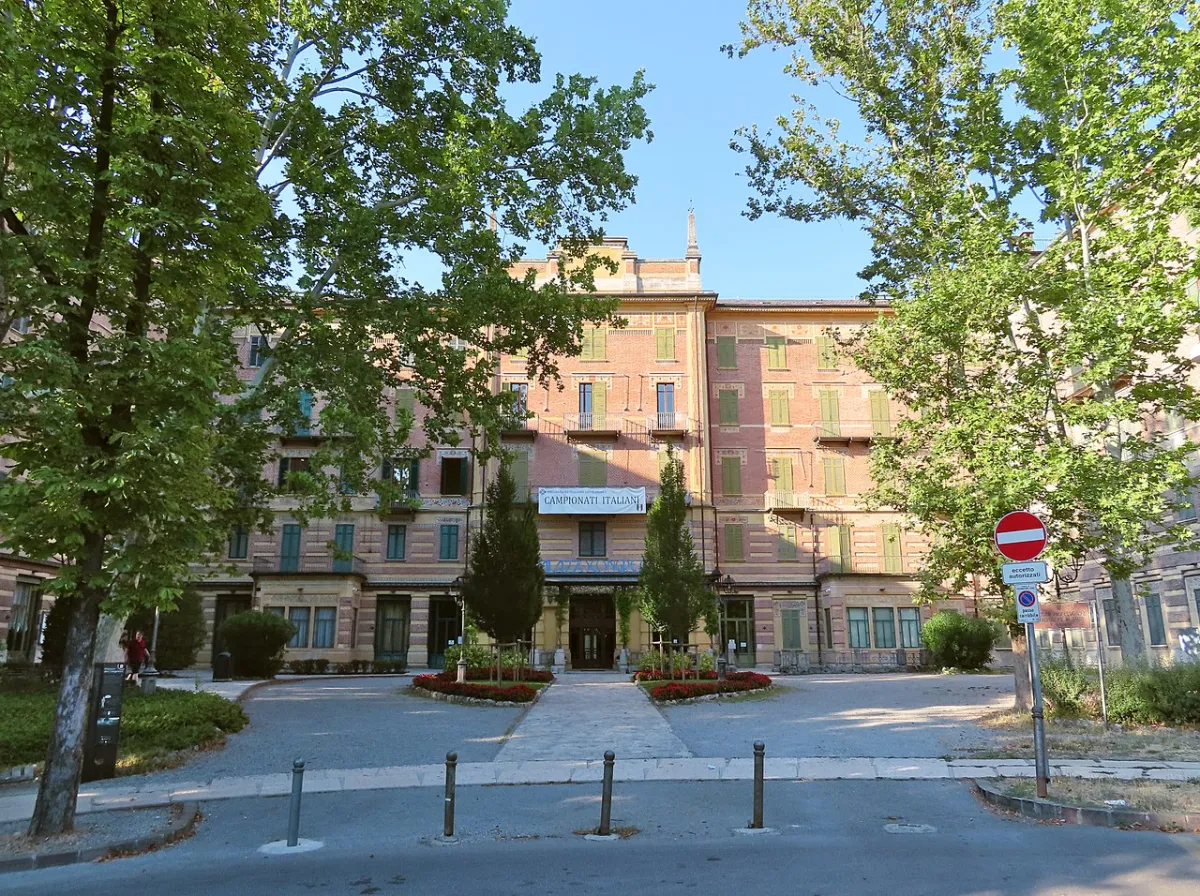
But the story doesn't end there. After the First World War, Galileo Chini and Ugo Giusti were brought in to expand and decorate the interiors, creating extraordinary rooms: the Salone Moresco (Moorish Hall), the Taverna Rossa (Red Tavern) and the Sala delle Cariatidi (Hall of the Caryatids) — spaces where Chini's Orientalist language reaches peaks of decorative exuberance.
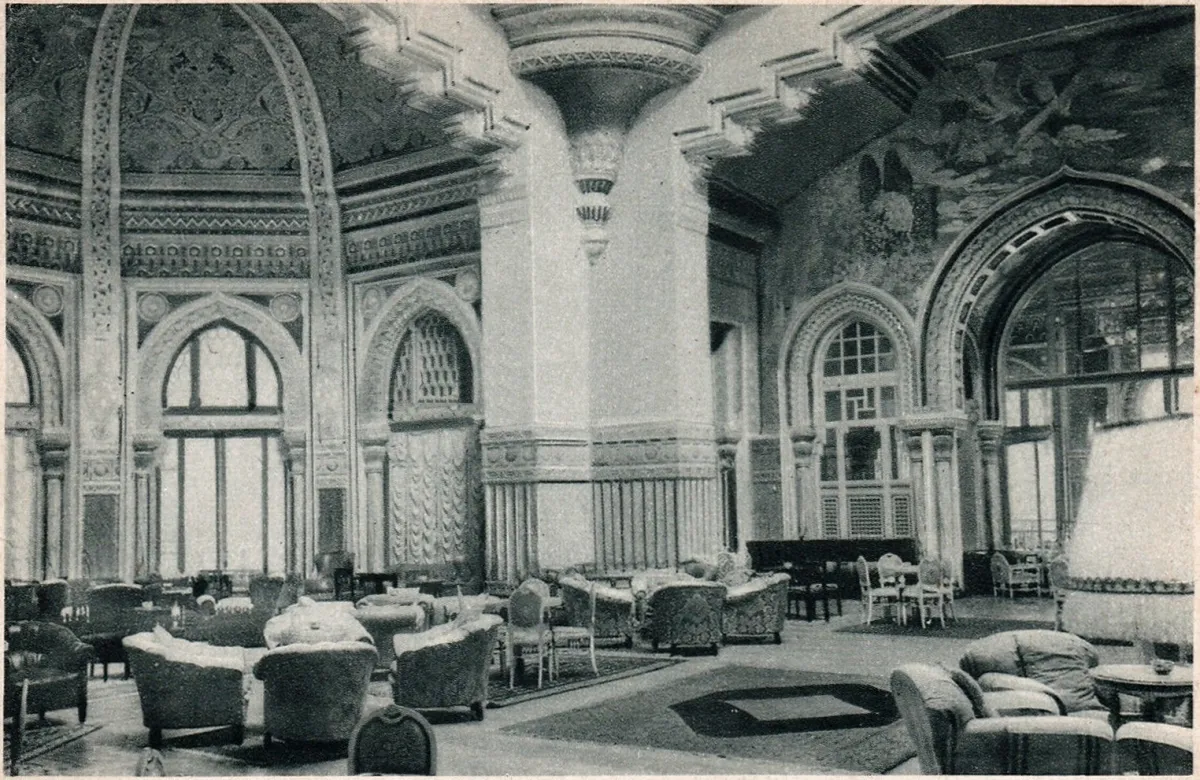
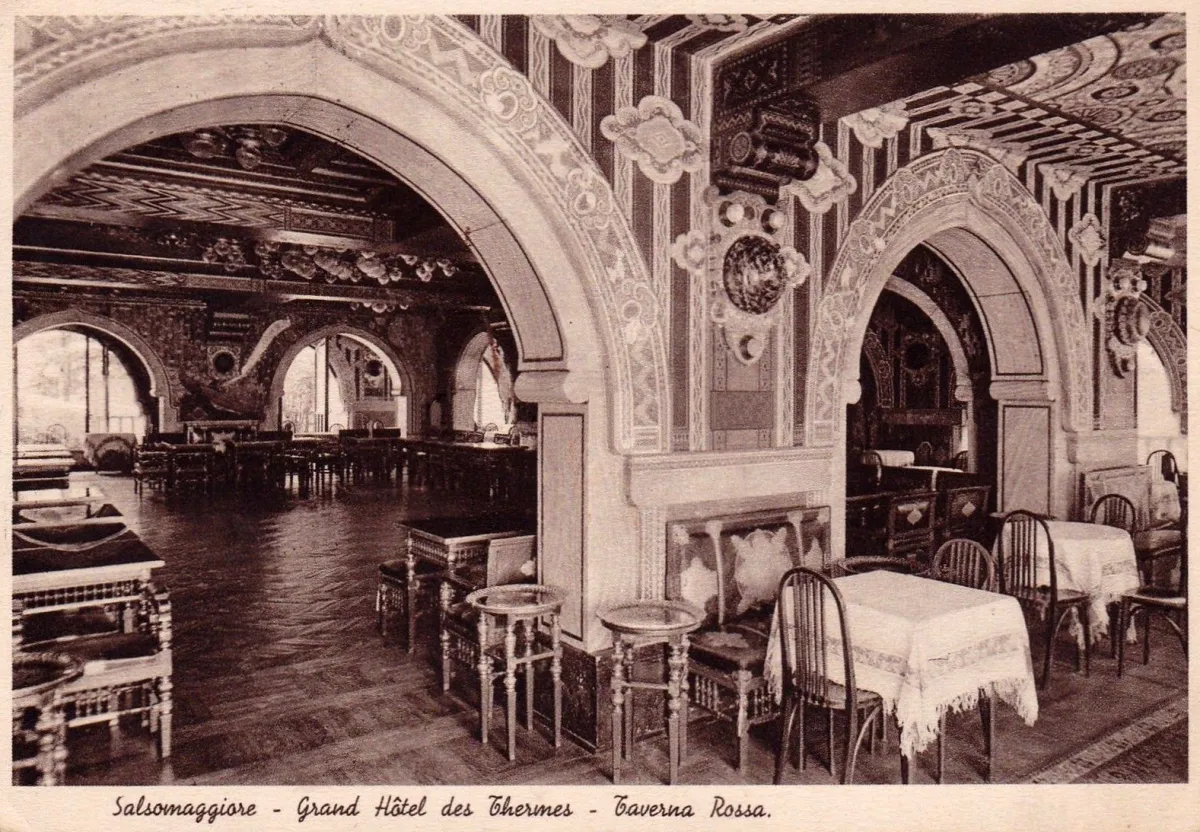
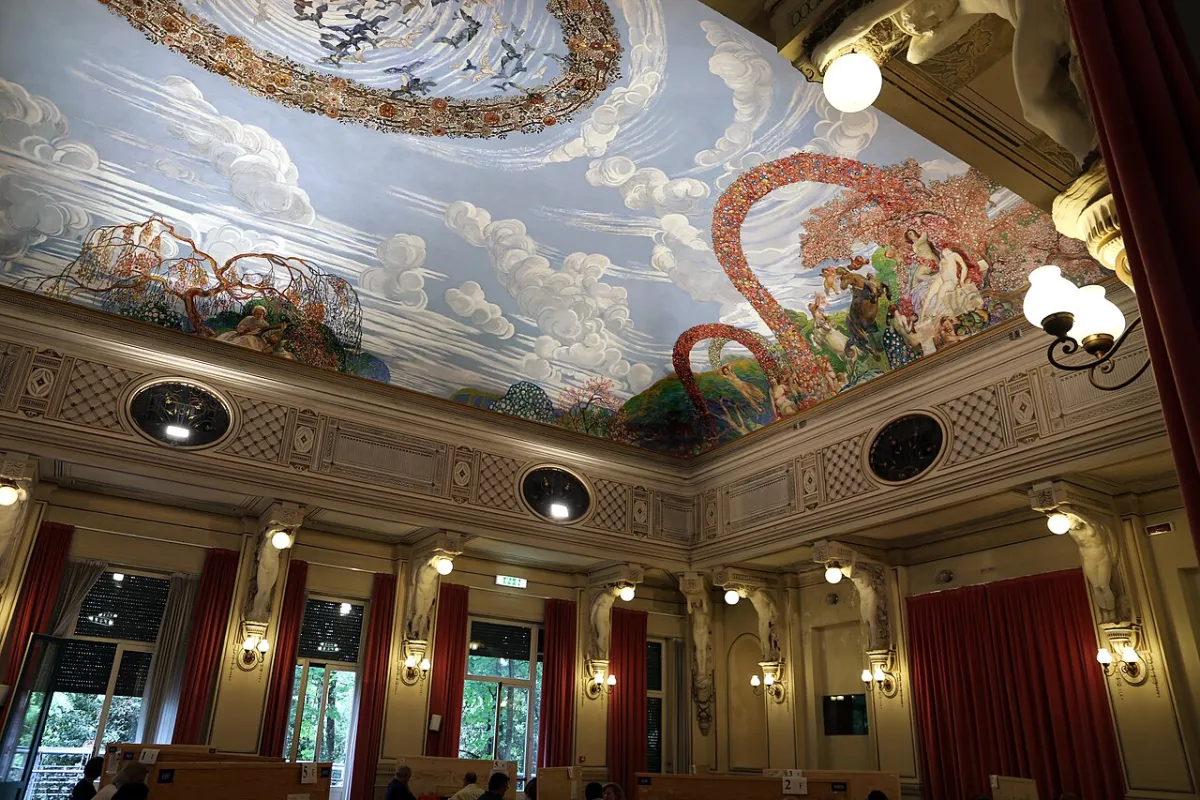
In 1965 the building was acquired by the Municipality and converted into the Palazzo dei Congressi (Congress Hall). Today it also houses the municipal library and a hotel management school. The exterior can be admired at any time; for the Chini-decorated interiors, check for any openings or guided tours on the municipal website.
Grand Hotel Regina (1913)
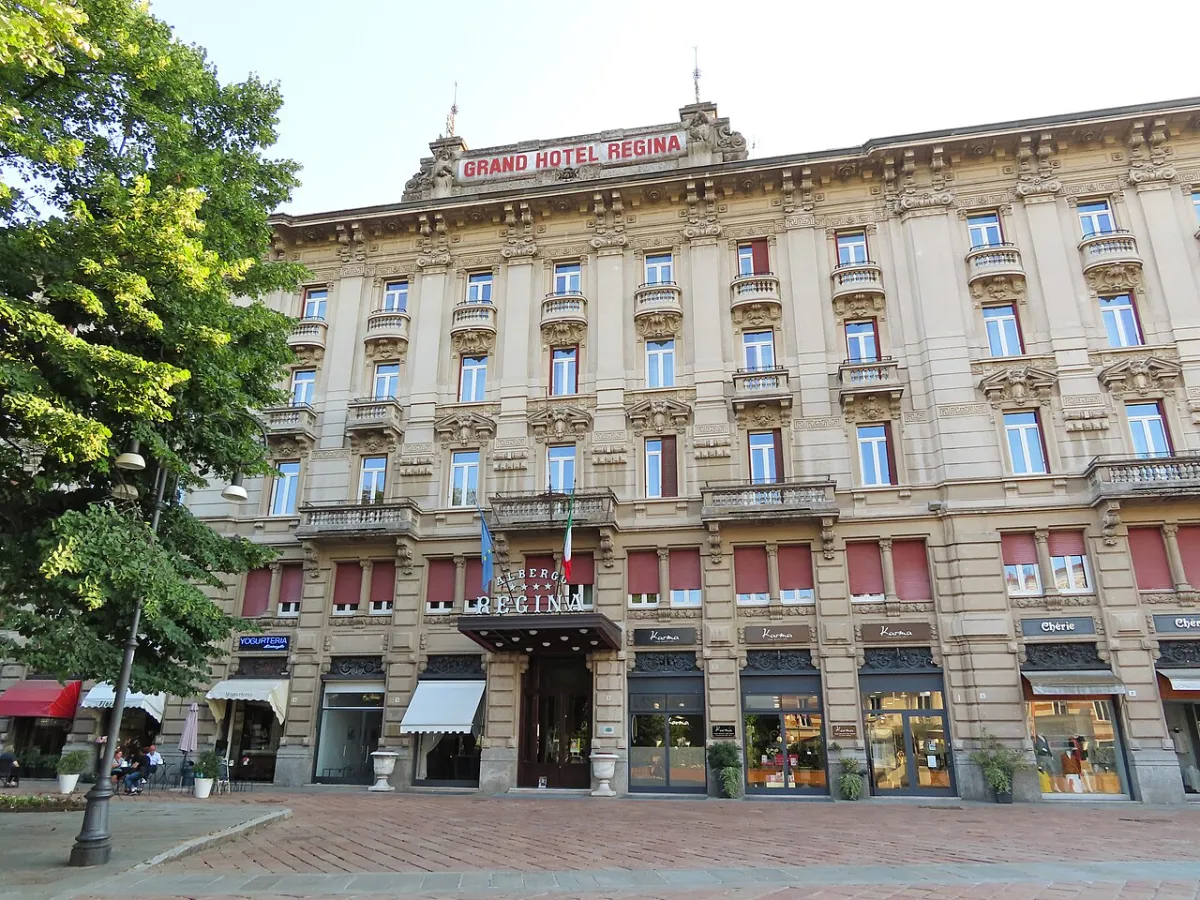
Not far from the Palazzo dei Congressi, the Grand Hotel Regina (originally Hôtel Regina e Simplon, inaugurated on 7 May 1913) is one of the Liberty-era hotels still in operation. The facade preserves its elegant early 20th-century lines, while inside you can still find the original Murano glass chandeliers and common areas with the charm of the era. It's a 4-star hotel worth visiting even just for a coffee in the lobby, to breathe the atmosphere of the Grand Hotel age of Salsomaggiore.
Galleria Warowland (1914)
Twenty steps from the Berzieri, the Galleria Warowland was designed in 1912 by Florentine architect Orsino Bongi (1875–1921), a pupil of Camillo Boito and Luigi Broggi in Milan. Opened in 1914 as a branch of the Milanese Warowland art gallery, the building has a cloister-like plan built around an internal garden facing the Berzieri.
The style is a Lombard neo-medievalism reinterpreted through a Liberty lens: wrought iron, coats of arms, graffito plasterwork simulating "fish scales," diamonds and palmettes, with ornamental wooden elements for interior staircases and floors. It's one of the most curious and least-known buildings in the town. Today it houses the Tourist Information Office (IAT) — stop in to ask for a map of the Liberty walking route and take the opportunity to admire the building from inside.
Villa Fonio
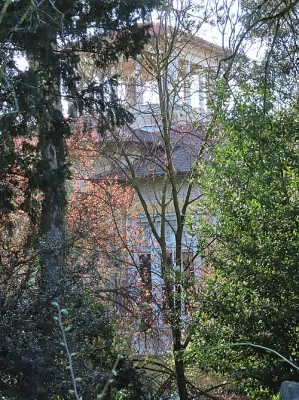
Among the private residences from the Liberty era, Villa Fonio is one of the most photographed. With its small tower and decorated facades, it represents the taste for elegant and whimsical villas that characterised the wealthy families drawn to the spa town. It can be viewed from the outside while walking through the residential streets of the town.
Railway Station (1935)
Even Salsomaggiore's railway station is part of the town's decorative heritage, though it belongs to the later Art Deco phase. Built in 1935 in white and pink travertine to a design by engineer Cervi (inspired by Milan Central Station), the interior is remarkable: a large coffered ceiling and four lunettes painted by Giulio Rufa (Rome, 1903 – Milan, 1970) that tell the thermal history of Salsomaggiore from Roman times through the Farnese and Maria Luigia eras to modern times. On the platform there is also a decorative fountain with five spouts. Worth a look even if you don't need to catch a train.
Poggio Diana (1929) — closed, visible from outside
On the hills above the town, Poggio Diana was built in 1929 by architect Mario Bacciocchi with the collaboration of Renzo Beretta and Galileo Chini, commissioned by Dr Olinto Della Lucia, administrator of the Royal Thermal Baths. It was a leisure complex set in a fairy-tale garden: tavern, restaurant, terrace, open-air theatre, swimming pool, tennis courts, clay pigeon shooting and a monumental luminous fountain.
In the 1930s and '40s it hosted famous jazz musicians and opera performances conducted by Maestro Pietro Mascagni. In the 1950s and '60s it reached its peak as a fashionable venue hosting the greatest orchestras and even the Miss Italia beauty contest. Sadly, it has been closed and abandoned since 2009 — one of the most fascinating abandoned places in Emilia-Romagna. A redevelopment project was presented in 2023, but works have not yet begun. You can admire the exterior from the road, and its story adds a melancholy and fascinating chapter to Salsomaggiore's Art Nouveau narrative.
Parco Mazzini: the Belle Époque garden
It's not just buildings: Salsomaggiore's green spaces also speak the language of the Belle Époque. Parco Mazzini, originally called Parco Regina Margherita in honour of Queen Margherita of Savoy (a frequent visitor to the town), was designed in 1912 by landscape architect Giuseppe Roda and planted in 1913. The design follows the Italian garden canon reinterpreted in a Liberty key: curving pathways, flowerbeds bordered by low boxwood hedges, Oriental design elements including a pagoda and a small lake. Among the monumental trees, look for a giant sequoia (150 cm diameter) and an Atlas cedar of the Glauca variety. The botanical route "The Trees of the Queen" highlights this centuries-old arboreal heritage. Free access, open all day — perfect before or after the spa.
The salt connection
Salsomaggiore's story begins underground. The name itself — "salso" means salty — reveals the town's deepest identity. For centuries, salt was extracted from wells drilled deep into the hills, making the local feudal lords (the Pallavicino family, the same who built Scipione Castle) wealthy and powerful. In 1839, physician Lorenzo Berzieri — the man who gives his name to the palazzo — discovered the therapeutic properties of the salt-bromide-iodine waters and received a concession from Marie Louise of Austria, Duchess of Parma, Piacenza and Guastalla.
That discovery transformed Salsomaggiore from a mining town into a spa destination. The arrival of QC Terme closes the circle, bringing contemporary wellness back to the place where Italian spa culture was born.
Combining Salsomaggiore with other visits
Salsomaggiore pairs perfectly with a visit to Scipione Castle, which is just 2 km away (read more in the villages and castles guide). You could visit the castle in the morning, stroll through the Art Nouveau centre admiring the buildings described above, then spend the afternoon and evening at QC Terme — a perfect full day. The town also has good restaurants and gelaterias that make a stop worthwhile in its own right.
Practical info — Salsomaggiore Terme
Distance: 12 km from the Podere (town centre)
Best for: a full or half day of culture + wellness + food
Combine with: Scipione Castle (2 km away)
Beautiful in any season — QC Terme makes it a year-round destination
Why visit in the off-season
This is one of my favourite recommendations for guests who stay at the Podere between November and March. While the villages and outdoor activities are best in warmer months, Salsomaggiore shines year-round. The Art Nouveau architecture is equally beautiful under grey skies, and now that QC Terme is open, you have the perfect reason to make the trip on a cold day: combine a morning visit to Scipione Castle (2 km from Salsomaggiore) with an afternoon of pools, saunas and aperitif at the Berzieri. It's probably the best way to spend a winter day in this part of Emilia.
Places map
To view the map, please accept map cookies.