

Verdi country: a guide to the places of the Maestro
The peasant from Roncole
"I have been, I am, and I shall always be a peasant from Roncole." Giuseppe Verdi wrote this in 1863, when he was already Italy's most famous composer, with a quarter century of triumphs in the world's opera houses behind him. Yet he kept defining himself this way: a peasant. A man of the countryside between Parma and Piacenza, of the lowlands where rows of poplars mark the field boundaries and winter fog transforms the landscape into a soft-focus painting.
This is the land where Verdi was born, grew up, and to which he always returned. Le Terre Verdiane — Verdi Country, as the area is known today — lies less than half an hour from the Podere. Busseto, Roncole, Sant'Agata di Villanova sull'Arda: names that every music lover knows, but which take on a different meaning when you visit in person, walking the same roads the Maestro walked all his life.
A genius born in an inn
Giuseppe Fortunino Francesco Verdi was born on 10 October 1813 in Roncole, then a rural hamlet in the municipality of Busseto. His father Carlo ran an inn with an attached grocery shop; his mother Luigia was a spinner. The family were not destitute — recent research confirms they were small landowners, and innkeepers of the era often could read and write, as they would read letters aloud for those who couldn't — but they were certainly modest, a world away from the music and theatres that would later define his life.
Verdi's musical calling emerged very early. At the age of four, little Giuseppe was introduced to the organ by Pietro Baistrocchi, the village's amateur organist. By ten he had taken Baistrocchi's place as organist at the Church of San Michele Arcangelo in Roncole — the same church you can see today, just across from the birthplace. It was Antonio Barezzi, a merchant and music enthusiast from Busseto, who changed the boy's destiny: he took him in, funded his studies with Ferdinando Provesi (chapel master at Busseto) and then in Milan, and gave him his daughter Margherita in marriage.
The rest is music history: Nabucco in 1842, then Rigoletto, Il Trovatore, La Traviata, Aida, Otello, Falstaff — twenty-seven operas that changed musical theatre forever. But what not everyone knows is that Verdi composed most of these works here, in the countryside between Parma and Piacenza, in the quiet of his estate at Sant'Agata.
Verdi the farmer
There is a side of Verdi that makes him particularly close to anyone who lives on this land: he was a passionate farmer. Not as a hobby, but as a parallel vocation. In 1848, with the proceeds from his early operatic successes, he bought the estate of Sant'Agata in Villanova sull'Arda — in the province of Piacenza, a few kilometres from Busseto. He moved there in 1851 with Giuseppina Strepponi, the opera singer who would become his second wife.
From that moment Verdi divided his life between music and the land. He personally designed the renovation of the villa, drawing sketches and giving detailed instructions on measurements and materials. He managed the agricultural estate with the same meticulousness he brought to his compositions: corresponding with his estate manager, discussing irrigation using water from the Ongina stream, producing his own wine — and in 1871 his farm manager wrote to tell him the wine was "perfect and very good indeed," and that 114 bottles had been produced, "beautifully corked."
Verdi was also a builder and innovator: he installed a mechanical pump to draw water from the Ongina stream to irrigate his fields, advanced technology for the era. In a letter he wrote: "So I play the architect, the master bricklayer, the blacksmith, a bit of everything." Anyone who lives in the countryside today and works the land recognises in these words a familiar attitude.
Places to visit
Birthplace of Giuseppe Verdi — Roncole Verdi
The natural starting point for any Verdi itinerary. The house where Verdi was born, in Via della Processione in Roncole Verdi, is a museum whose value is above all symbolic: the rooms are bare and simple, as they would have been at the beginning of the 19th century. A multimedia tour with tablets in each room and an augmented reality app tells the story of the Maestro's childhood. The visit takes about thirty minutes. Opposite the house stands the Church of San Michele Arcangelo, where the young Verdi first played the organ.
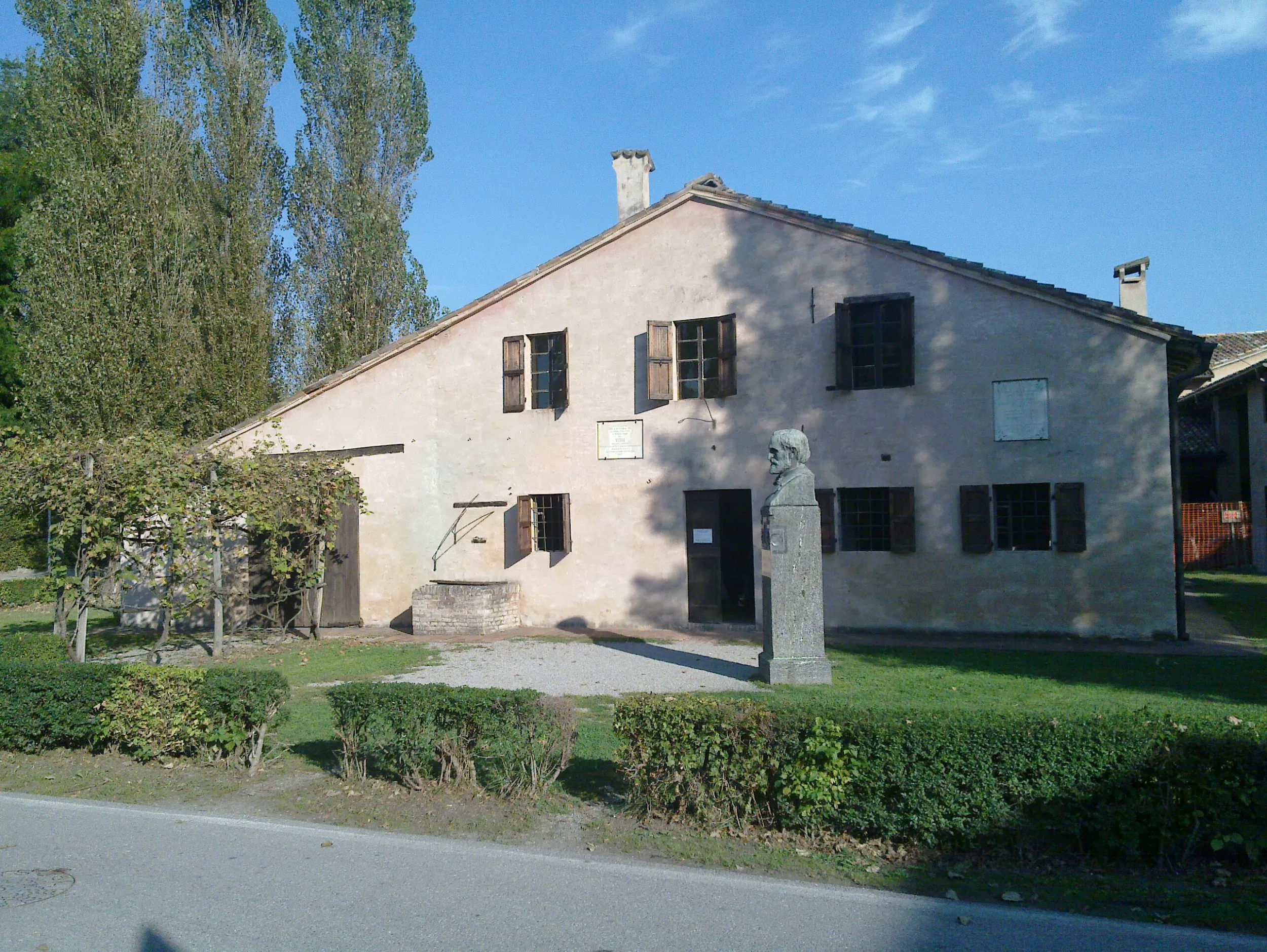
Admission €6. Tuesday to Sunday, 9.30-13 and 14.30-17.30 (March-October). Closed Mondays.
Teatro Giuseppe Verdi — Busseto
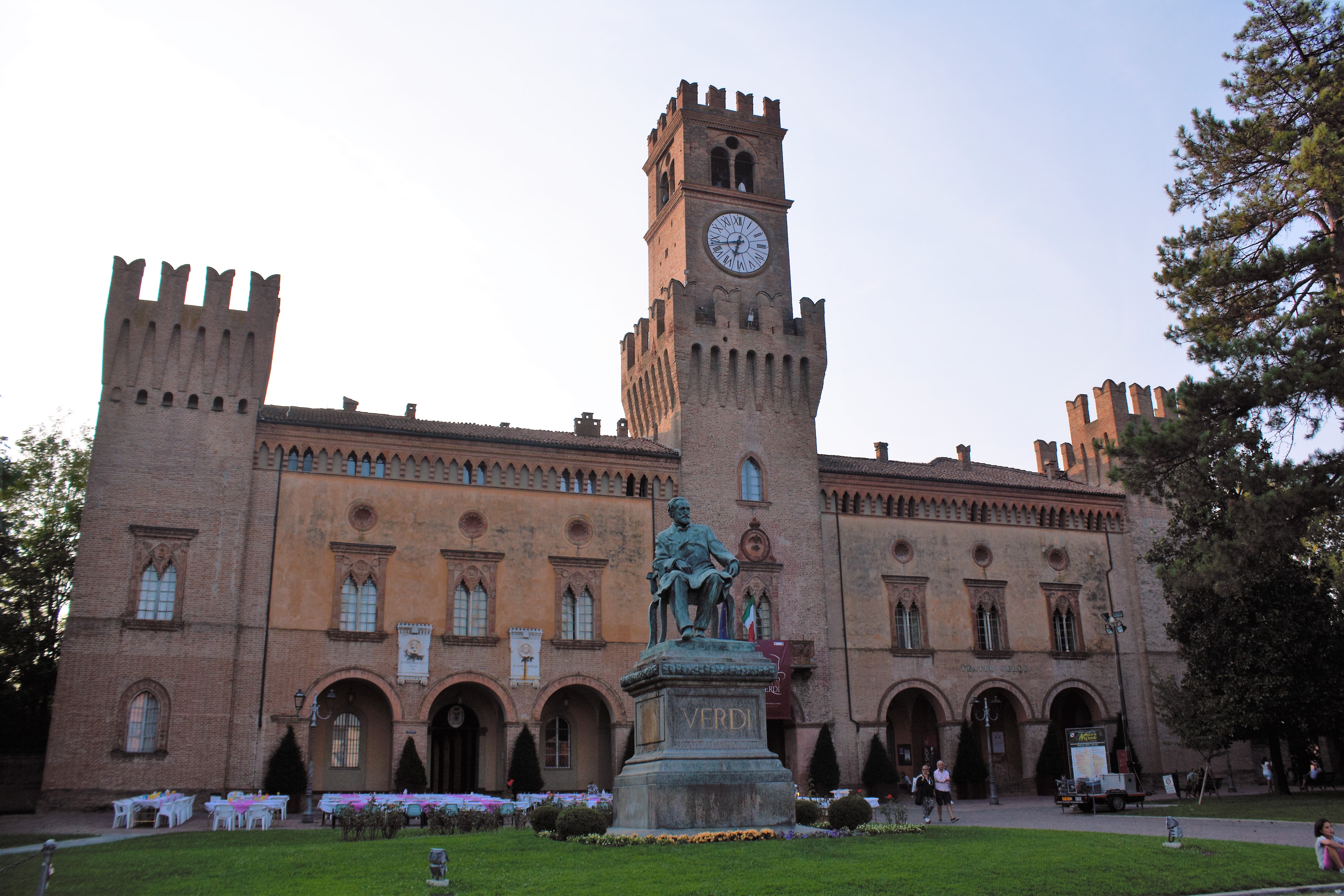
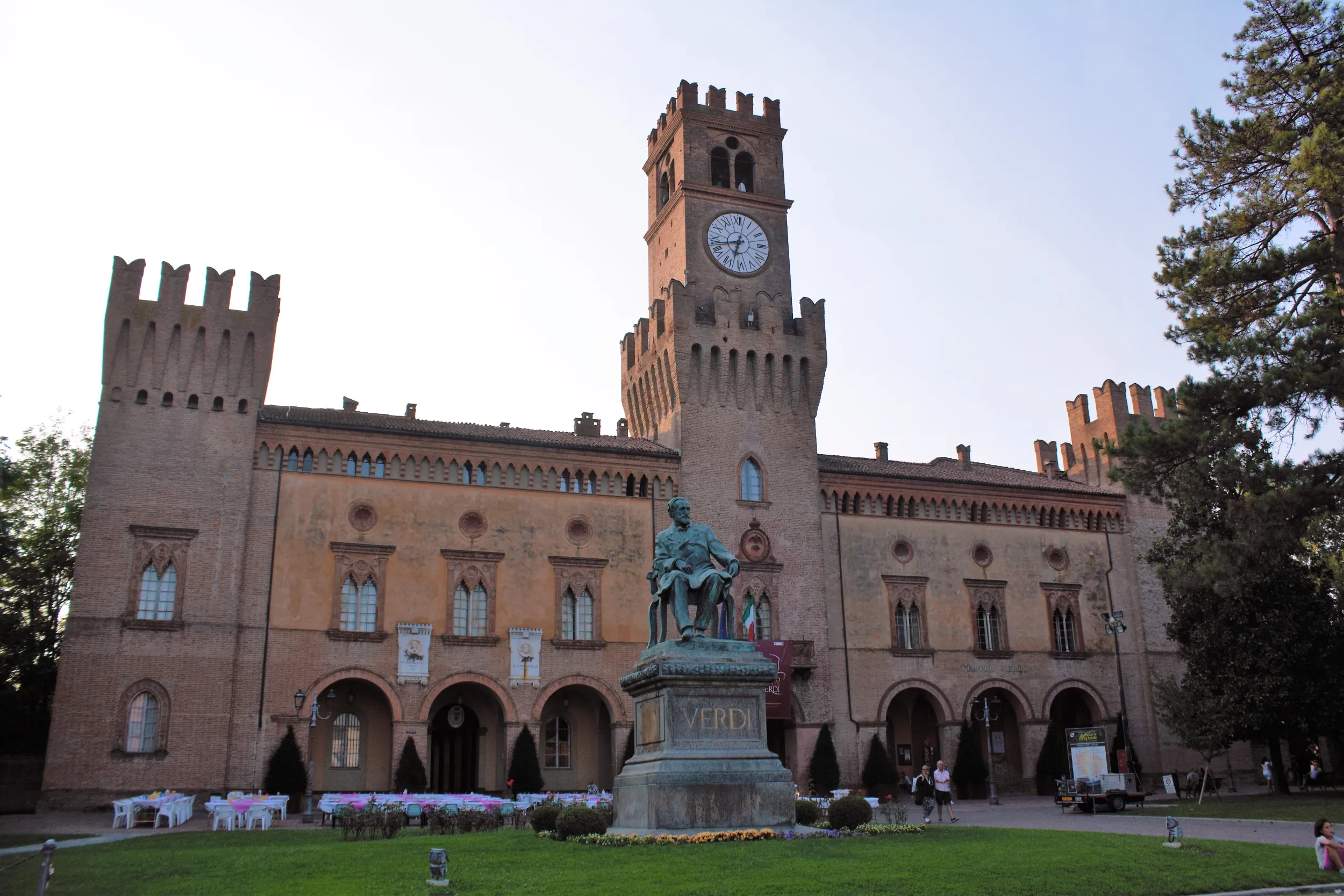
The jewel of Piazza Verdi, in the centre of Busseto. A 300-seat opera house built between 1856 and 1868 inside the Rocca Pallavicino, the 13th-century fortress of the lords of Busseto. The theatre's story has an ironic twist: the townspeople built it to honour their most famous citizen, but Verdi opposed the project and didn't even attend the inauguration. Today the theatre hosts a concert season and guided tours run regularly, every thirty minutes. The auditorium is intimate and splendid, with boxes decorated in red and gold.
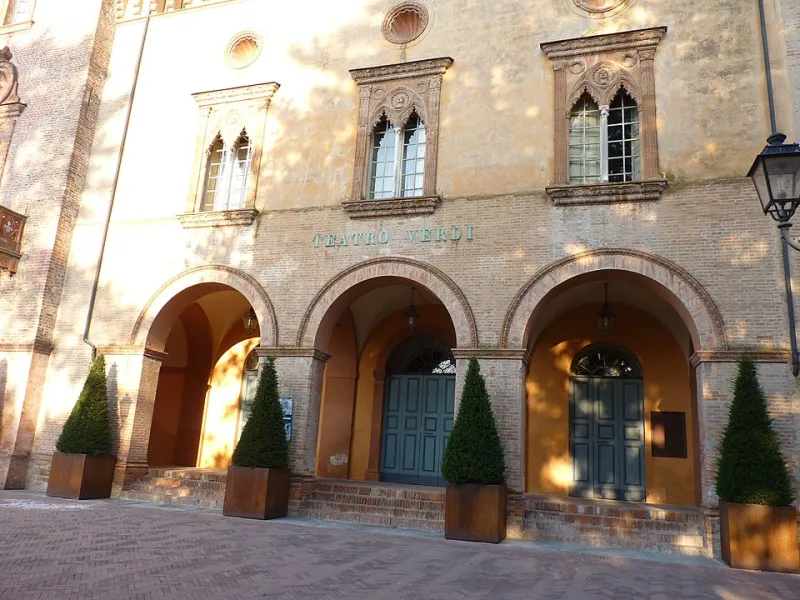
In the square you'll find the monument to Verdi (1913) by sculptor Luigi Secchi: the Maestro sits calmly in a chair, watching over the town. Not to be missed nearby is the Salsamenteria Baratta, a historic delicatessen since 1873, which Verdi himself used to visit.
Admission €6 (or combined ticket). Guided tours Tuesday to Sunday from 9.30.
National Giuseppe Verdi Museum — Villa Pallavicino, Busseto
Note: currently closed for renovation. Check bussetolive.com for updates on reopening.
When open, this is the most exciting museum on the Verdi circuit. Housed in the 16th-century Villa Pallavicino — one of the finest Renaissance residences in the Parma province, with its moat, Baroque frescoes and a poplar-lined avenue — it presents all 27 of Verdi's operas in an immersive journey designed by set designer Pier Luigi Pizzi. Twenty-one rooms with original stage designs from Casa Ricordi, period costumes, theatrical lighting and the Maestro's music. A theatrical experience rather than a museum visit.
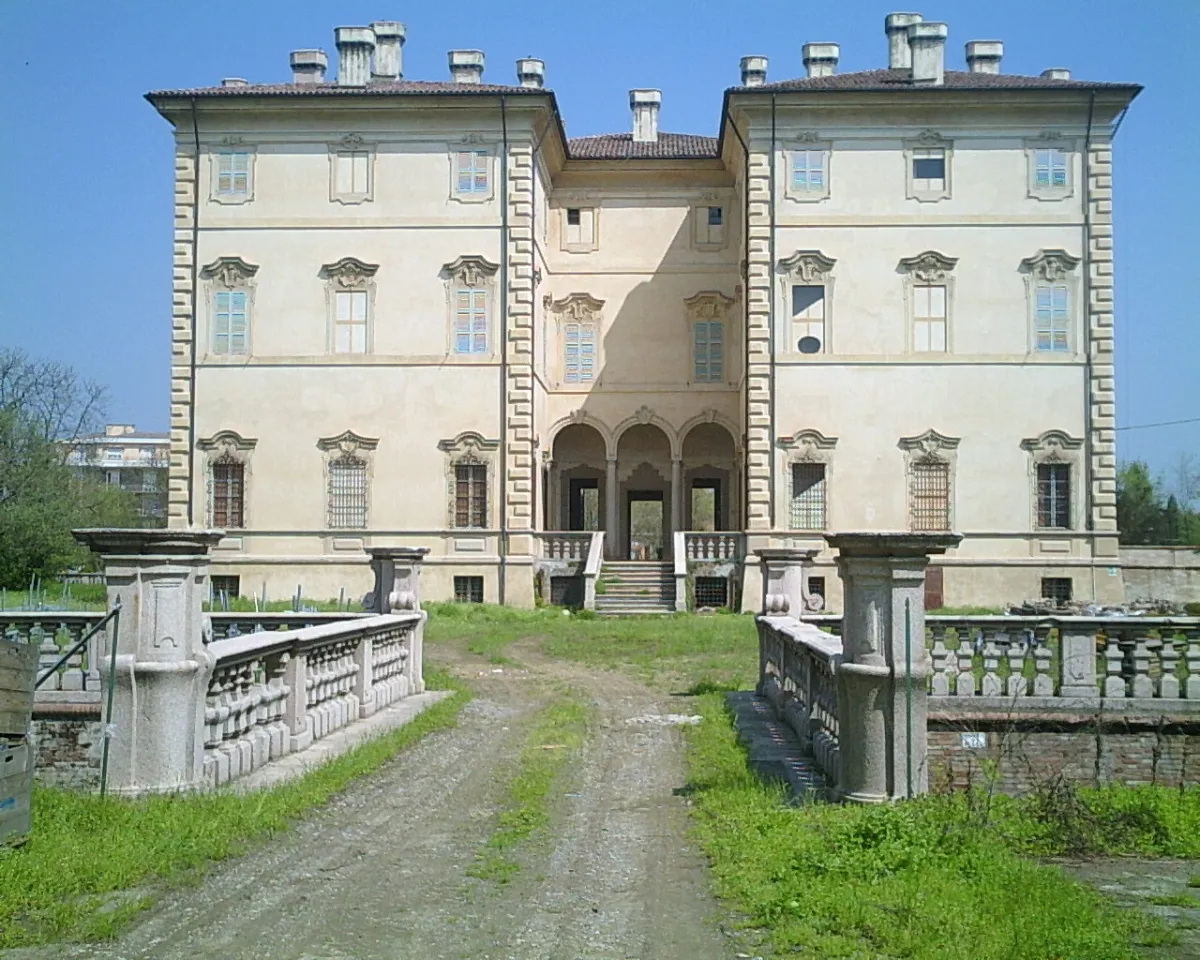
Villa Verdi — Sant'Agata di Villanova sull'Arda
The home where Verdi lived for nearly fifty years, from 1851 until his death in 1901. Here he composed La Traviata, Un ballo in maschera, Aida, Otello, Falstaff and many other works. The villa was acquired by the Italian State in February 2025 and is currently undergoing restoration, with works expected to continue until 2026-2027. It opens only on special occasions, such as the FAI Autumn Days. When it reopens to the public, it will be well worth a visit: the rooms retain their original furnishings and the park, designed by Verdi himself, is a place of extraordinary peace.
How to plan your visit
From the Podere, reaching Busseto takes about twenty-five minutes by car. The best way to enjoy a Verdi day is:
- Morning — start at the Birthplace in Roncole Verdi (30-minute visit). Then drive to Busseto centre (5 minutes)
- In Busseto — visit the Teatro Verdi in Piazza Verdi, stroll through the historic centre, visit Casa Barezzi if open. Stop at the Salsamenteria Baratta for a taste of culatello and local products
- Lunch — Busseto is also the land of culatello di Zibello, one of Italy's most prized cured meats (read more in the Parmigiano and cured meats guide). The area is rich in restaurants and trattorias
- Afternoon — if Villa Pallavicino is open, dedicate a couple of hours to the Verdi Museum. Otherwise, the tour of Busseto and Roncole fills a half-day beautifully
The combined ticket (Birthplace + Teatro Verdi + Casa Barezzi + Tebaldi Museum, €22) is good value if you visit at least three sites. Tickets at the Tourist Office in Piazza Verdi 10, Busseto, or at the individual venues.
Practical info — Busseto Tourist Office
Piazza Verdi 10, Busseto (PR)
Distance from the Podere: about 25 km (25 minutes by car)
Phone: 0524 92487
Email: info@bussetolive.com
Website: bussetolive.com
Places map
To view the map, please accept map cookies.